Only in Bangkok

February 3, 2012

I thought I would share some details about what I did this past Saturday, to give you a good idea of an average, ordinary day in Bangkok.

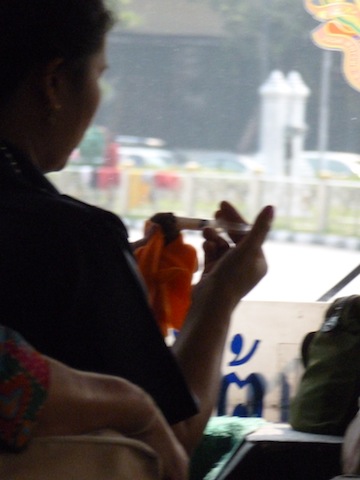
My day began by meeting a friend in the lobby of my apartment building, so that we could catch the bus together to meet a few friends for breakfast.  We said our usual “Sa wat dee kha”  to the lovely guards at the bottom of our building, and headed out on a walk to the bus.  At only 10am, it was already 85 degrees outside; the sun was shining, and all of the street vendors who crowd the Bangkok streets were just beginning to set up their food and clothing stands to begin their long weekend of work.  We climbed up the stairs of the overpass, which provides a safe way to cross the huge, 10-lane highway, passing the usual homeless men lying on the concrete, and the standard installments of individuals singing into a microphone hoping to make some money.  We hopped onto our bus, being careful not to touch the monks, clad in their orange robes, who were also boarding the bus.  We sat down, and the bus “tout” came over to collect our money – only 8 baht (about 25 cents), because the bus was open-air and not air-conditioned.  I quickly noticed what looked like an animal’s cage resting at the front of the bus next to the driver – based on the tail that was visible we assumed it must be a squirrel.  Well, that’s odd.  After the bus tout was finished collecting money, she proceeded to the front of the bus, opened the cage, pulled out what we think was a baby squirrel, wrapped it up in a small baby-squirrel-sized blanket, and proceeded to feed it with a syringe, squeezing something into its mouth for the remainder of the ride.  I tried to get a good picture, but the bus ride was so bumpy that a blurry one will have to do.
We then proceeded to Ethos, our new favorite earthy-crunchy, all-natural, sing-kumbaya, can’t-wear-shoes-inside, sit-on-the-floor type of restaurant. We had the most incredible banana mango gluten-free pancakes. I know it doesn’t sound like much, but they were delicious.

Afterwards, we ventured out to the main road in the now sweltering heat.  We waited for a bus that we knew would take us to the mall right by our apartment complex.  We fully expected to have at least a 30 minute bus ride – it takes minimum of thirty minutes to get anywhere in Bangkok, because there is always traffic.  Well, no one had mentioned to us that this bus takes the most roundabout, absurd path to go from point A to point B.  The ride ended up taking us 2 hours.  Don’t get me wrong, seeing the scenery of a weekend in the city was great, but my gosh, in that heat, with no air-conditioning, it was rough.

After two hours, our mall destination was finally in sight, so we got up and pressed the red button which signals to the driver that we want to get off at the next stop.  He was driving particularly aggressively at this point, especially considering how bad the traffic was.  And then, like slow motion, I saw it: bus jerking left, small helpless car turning right, and then — CRRUUUNCCHHH.  The horrible sound of metal crunching.  Our bus crashed straight into the car next us.  We all looked at each other, decided it would be best to just get off that bus as fast as possible, and into the refuge of the huge and nicely air-conditioned Central Pinklao mall.

Just another morning in Bangkok, Thailand.


Botswana, Week 1: Intro, Facts and Excursions!

February 3, 2012

Hello, everyone. My name is Igor Martic, and I am junior (class of 2013) studying International Economics at the University of Richmond (UR). Currently, I am acting as a Foreign Correspondent for UR while representing the student exchange program at University of Botswana (UB), Africa. Welcome to my blog! Feel free to contact me at any time via e-mail: Igor.Martic@Richmond.edu. Enjoy, and I encourage my readers to leave comments. Thanks! Now, for an introduction to UB…

Here is a video I recorded while flying into the Gaborone, Botswana airport:

Next, I’ll answer some basic questions you might have about University of Botswana.

How many people attend University of Botswana (UB)?

Botswana, a country with a population of a little over two million, has a very limited amount of space in its one University, UB. There are approximately 15,484 (1,445 postgraduate) students and 2,658 faculty and staff.

What does University of Botswana (UB) have to offer?

UB provides many options and locations for its students. With four campus locations nationwide, this University has grown to become internationally renowned for its academics. UB offers seven areas of study: Business, Education, Social Sciences, Science, Engineering, Humanities, and Medicine.

When are the important dates for University of Botswana?

UB was established in 1982 as a public university in Gaborone, Botswana. Semester 2 (referred to as spring semester in the States) begins around January 9 of the new year and ends May 6. Exam week ends May 10, final grades are due May 24, and grades are finalized May 26.

The UB course catalog:

http://www.ub.bw/documents/UB_UnderGrad_Academic_Cal_2010_2011.pdf

Where is University of Botswana?

UB has 4 locations: 2 in Gaborone, 1 in Francistown, and 1 in Maun. The main campus, and the one I attend primarily, is located in Gaborone, Botswana, Africa.

Why was University of Botswana established?

UB was established for the purpose of educating the citizens of Botswana. With an economy that depends on primarily one resource as its main source of income (diamonds), Botswana understands that a limited resource also brings limited opportunities. UB exists to create a better social, private, and professional life for everyone across the Botswana lands. An educated and innovative society will bring intelligent and creative new ways of life and business to a nation that relies heavily on a depleting natural commodity.

How do I get more information about University of Botswana?

UB is an amazing academic institution. Please stay tuned to my blog for more personal information about this anything-but-ordinary study abroad experience. Also, please contact your advisor, international education office, or http://www.ub.bw for statistics, facts, and ways of applying to study here with the great citizens of Botswana and the “internationals” like me!

Finally, I’ll discuss some of the excursions I’ve had so far and will enjoy over the coming weeks.

After being in Botswana for a little under a week, I’ve had a quick, but simultaneously slow, transition into the culture, environment, and atmosphere of this new life.

To become more acquainted with our new home for this semester, the local students and the school have set up excursions for us to attend. This includes visiting the local village, a hike into the Gorge, local village dancing and an overnight stay, learning African pottery techniques, a game drive, and viewing one of the oldest living African trees and rock paintings in the world.

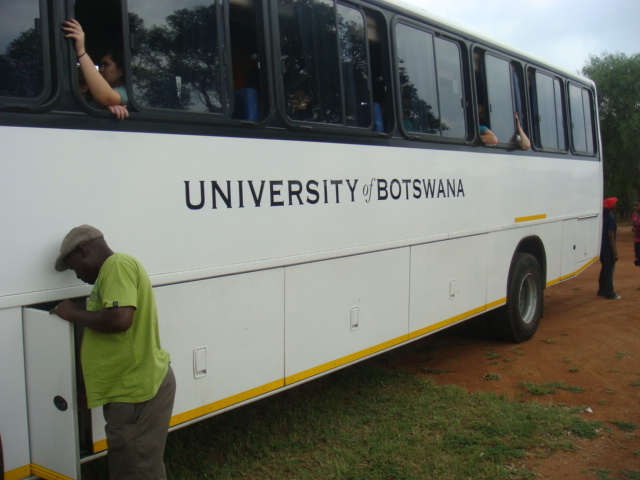
For our first excursion, we packed into a UB bus and headed out to the Kanye Village in Botswana, Africa. The trip lasted a brief 2 hours, but was well worth it! When we arrived, we were told that all males had to change into long pants and a collared shirt, and the females were required to cover their legs and shoulders. This was to respect the local customs of the tribe.

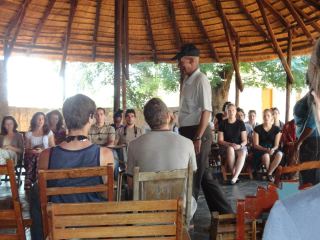
They had us seated in their local “courthouse.” A local directed the males to sit in the front of the females in traditional, hand-made chairs. He was very well-spoken and groomed, educated, and made everyone feel like he was their grandfather with a cheek-to-cheek smile and open arms. Surprisingly, he spoke my language, Serbo-Croatian, with almost perfect grammar and a slight African accent.

Group discussion

Side wall of village


Traveling is done… let orientation begin!

February 3, 2012

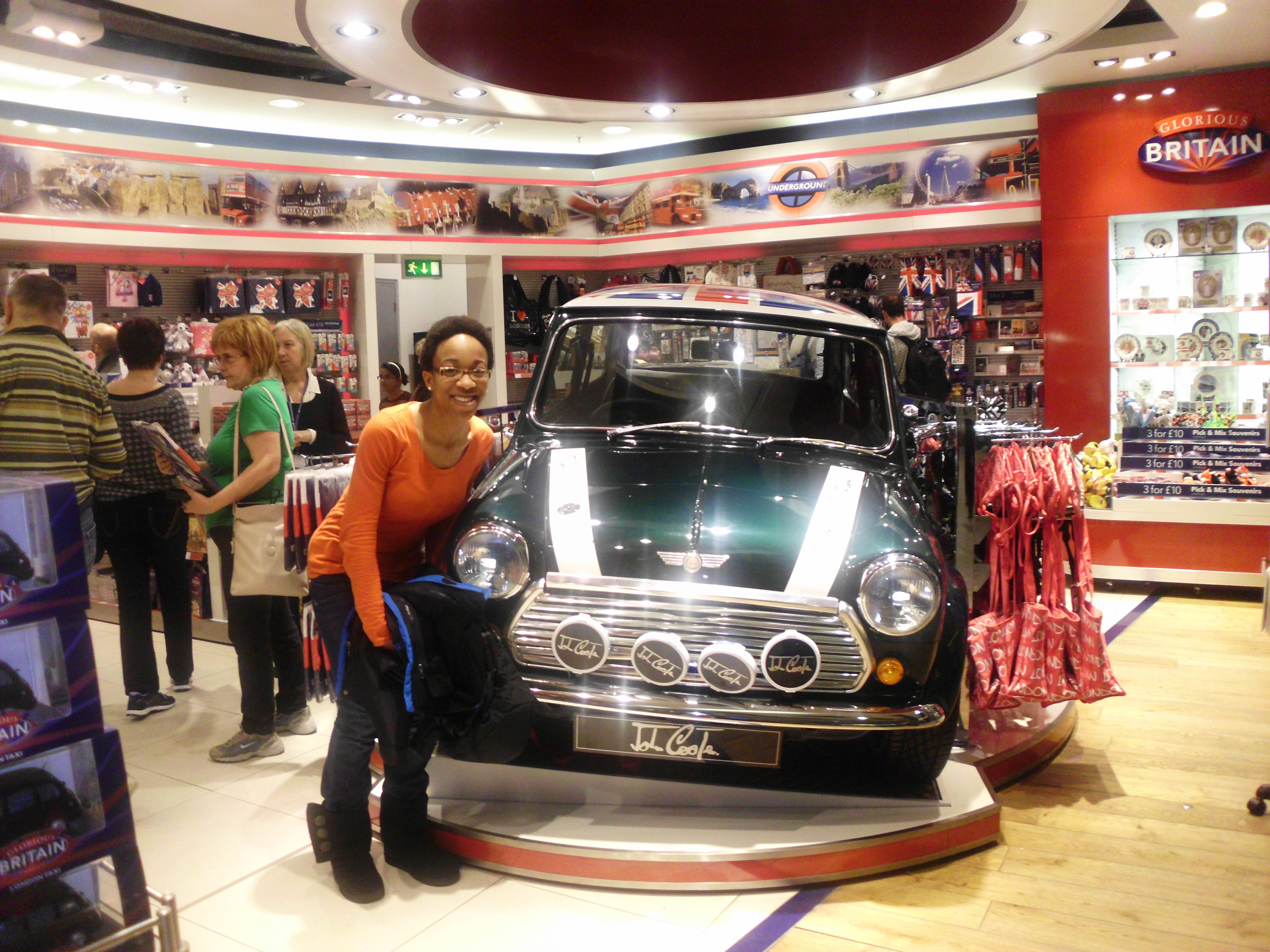
As you can assume from the title of my blog, I have made it to the Netherlands!  After a long, but comfortable flight to London, a short flight to Amsterdam, and a 2 1/2 hour train ride to Maastricht, I have arrived!  I must say that although I enjoy traveling to new places, I wish I could save several hours by teleporting myself to wherever I would like to go.  Despite the long journey, I had a nice time in the London airport.

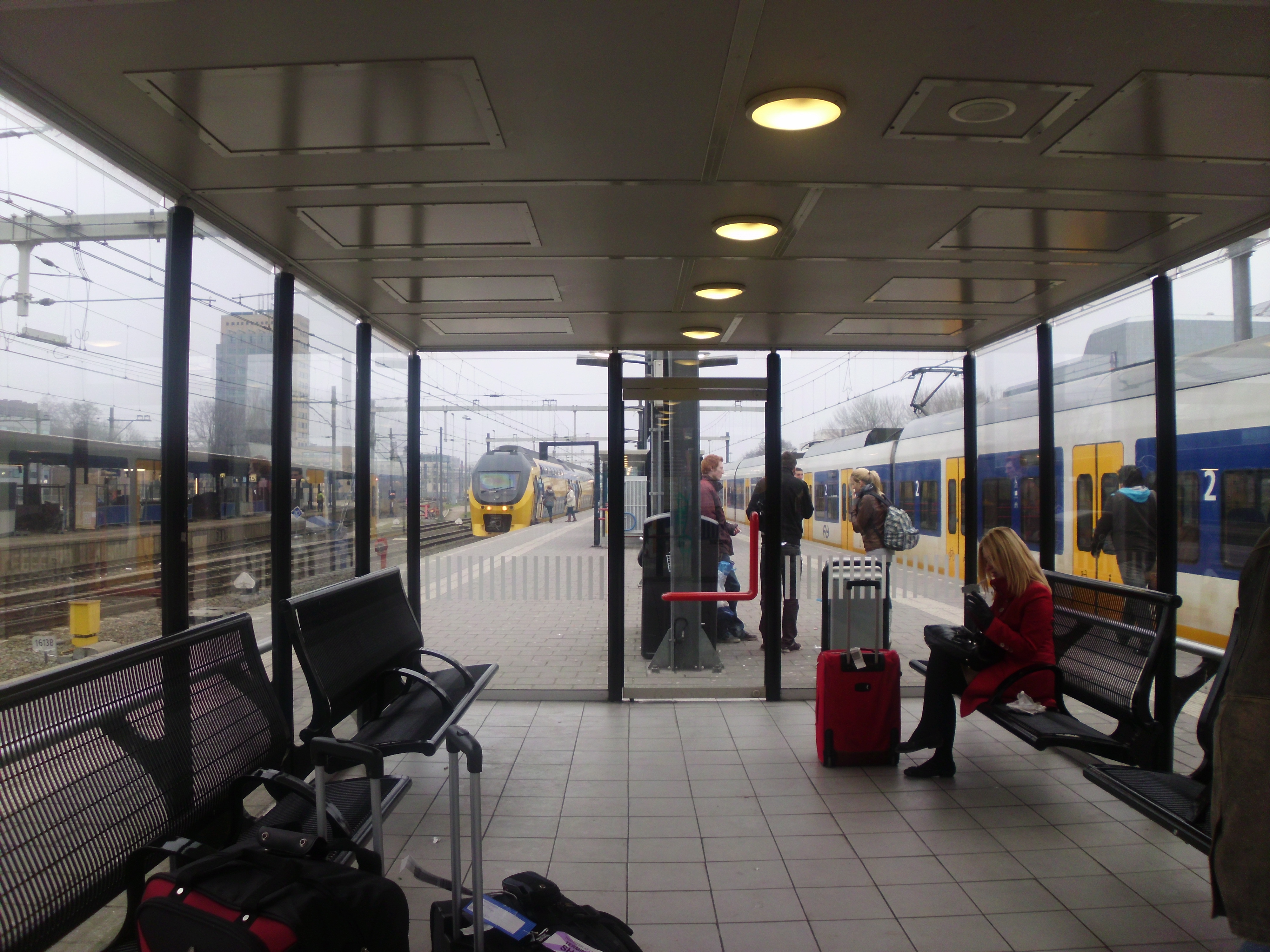
My trip was also nice because one of the student organizations at UCM picked me up from the train station and took me to what would become my home for the next 4 months.  A funny story about the train ride:  I was buying my ticket in the Amsterdam airport and the man helping me circled where I needed to transfer and made sure I understood what I needed to do (since it was in Dutch) before I walked away.  When the transaction was done I walked away, saw a young guy looking at me so I smiled out of courtesy than kept walking.  I made it about two steps before I heard someone say “Whitney?”  I was really confused as to who would be calling my name in the Amsterdam airport, but naturally I turned around to see if I knew the person.  “I couldn’t help but overhear your conversation.  Are you by any chance the Whitney who is going to UCM?”  Then I realized that he was the person who was supposed to get picked up from the Maastricht train station with me, since our train was arriving at the same time.  Once we exchanged brief introductions, we proceeded to the platform and our 2 1/2 hour ride began.

Re-focusing on the title of this entry, now: Traveling is done, so let orientation begin.  Today was my first day of orientation.  When I woke up this morning and looked out the window, snow was covering the ground, and it was still coming down.  Snow is a kind of rare occurrence in Virginia, so I was excited.  My second reaction was the realization that I needed to prepare to walk approximately 20 minutes in snow, since I don’t have a bike yet.  I also had a feeling that it was going to be extremely cold, so I put on layers and headed out.  Although the snow kept falling during my walk and continued throughout the day and most of the evening, it actually wasn’t as cold as I thought it was going to be.  I have to admit that I kind of enjoyed walking in the snow; it was peaceful.

Once I made it to UCM, I welcomed the breakfast and immediately started mingling with the other exchange, transfer, and freshmen students.  I met people from literally all over the world: Singapore, Australia, the U.S., Germany, Peru, and, of course, the Netherlands, just to name a few.  Everyone was friendly, so it was easy to talk to people.  During orientation, we received our class schedules, learned about UCM’s online programs (student email address and online file storage), and began PBL (Problem Based Learning) training.  I was worried what my schedule was going to look like, because I was told that it was possible to have class anytime between 8:30am and 6pm, Monday through Friday.  Luckily, I don’t have class on Monday, and I only have one 8:30am class.

You may be curious about PBL.  In a nutshell, it’s when a tutor (equivalent to a professor) observes the class while an appointed student (the discussion leader) leads a discussion about a specific text.  At the end of this discussion, the students collectively create learning goals to serve as a guide while they read for the next class.  These tutorials take place twice a week, whereas the lecture for the course only takes place once a week.  I’m excited to see how this works, especially since it’s very different from what I’m used to at UR.  I have orientation for two more days, and then classes will begin this Tuesday. In particular, I’m looking forward to the “Introduction to Dutch Culture” lecture.

One more thing that I found interesting about my first day of orientation: the food.  For lunch, a Dutch student took a few of us to a nearby deli place, which thankfully had an English menu.  As you can probably assume, sandwiches are not something that are unique to the Netherlands.  Also, for dinner, the student organization that picked me up from the train station organized a dinner that was only 5 euros.  Frankly, I didn’t really care what they were providing, since it was inexpensive and it meant I did not have to cook that night.  It was Chinese take-out.  It was absolutely delicious and well worth the money, but once again, Chinese food isn’t a unique part of Dutch culture.  With that said,  tomorrow I will venture to the grocery store.  Wish me luck!


Barbados, Week 2: Where the Wild Things Are

January 30, 2012

It’s the start of a new week, and I finally feel like I’ve got my head on straight.  Survival mode has seamlessly transitioned into “vacation” mode, as the first week of classes at the University of the West Indies consists of only one class meeting, in which the professor may or may not show up, merely handing out the syllabus and discussing it if he or she does indeed come.  The days have blended together, as my biggest daily decision is whether to head down the hill to Batt’s Rock Beach with the morning crew, the afternoon crew, or both.  There’s been days when I’ve rolled out of bed and thought to myself, “there has to be something I have to do… I can’t have this open of a schedule”, but, in reality, the only absolute necessities of the day are picking out some delicious food to eat at the cafeteria and tracking down the lecture halls for my 6:00 or 7:00 pm classes.  After the hectic hustle and bustle of the first few days — sorting out school payments, navigating the transportation systems, and getting my class schedule straightened out — things are definitely feeling more natural.

As soon as I had become comfortable with life on UWI campus, though, the urge to keep exploring was buzzing around my head.  This was probably one of the last weekends of the semester of abundant free time before my nose would be stuck in the books, I realized, and thus it was prime for checking out some of the more remote destinations on this island of 166 square miles.  Although Barbados is not necessarily known for its abundant wildlife, there were rumors that a place called the Barbados Wildlife Reserve, in the northern parish of St. Peter, had a number of different species within their confines.  Oh, and not all of them were in cages!  Our group crammed ourselves onto the local bus headed north toward Speightstown, passing the ritzy tourist-trap Holetown on the way.

The Wildlife Reserve is located in the middle of picturesque rolling sugarcane fields, but once inside the “zoo,” visitors follow winding stone pathways that are nicely shaded by hundreds of tall trees.  Immediately, the cameras were out, and before we walked more than a dozen yards into the park, many of us were excitedly snapping countless pictures of the large tortoises meandering through.  Little did we know that Bajan deers (formally known as red brocket deer), peacocks, pythons (caged, of course), parrots, and the famous green monkeys awaited our eager eyes.  A Bajan zoo-keeper distributed peanuts to those who wanted to feed the monkeys, and it was a challenge to keep a straight face as the mischievous-looking monkeys hopped up next to you, uncurled your hands with their miniature fingers, and proceeded to eat all the food in your hands in mere seconds.  Reactions ranged from one girl shaking in nervous energy to another proclaiming she could “die happy” after having had such a close encounter with the green monkeys.

The next nature adventure our group undertook was one that I, myself, had searched out and organized.  Before I arrived in Barbados, I knew two things:  One, I wanted to see as much of the island as possible; and two, I wanted to do so on a budget where I could still eat during the last month of school.  The Barbados National Trust hikes are the love-child of such ideals, as they are free hikes guided by the Barbados National Hikes every Sunday at either 6:00 am, 3:30 pm, or 5:30 pm.  This Sunday’s hike took place in Foul Bay, a complete geographic unknown to me before that afternoon, and I discovered it was all the way on the other side of the island.  I called a taxi, gave him all the logistics for the 3:30 pm hike, and estimated that about 10-15 students would be going on the hike.  Sunday afternoon, nearly 30 students came out to our meeting spot to take the taxi!

Foul Bay turned out to be quite an amazing scene.  We drove down a steep hill, parked among a thick enclave of trees, and marched out onto the beach, lined with palm trees and sandwiched between huge stone cliffs.  Our tour guide was a wizened, older Bajan man named George, who not only gave us some historical background about the area we covered, but also launched into some serious philosophical musings about the future of renewable energy, the dangers of money, and World War III.  At one point in the 6- mile, three hour hike, he took me aside and told me that “you, young man, are going to be the leader of your group.  There is a lot of you, and we need to make sure everyone makes it back”.  I took away a strange satisfaction that George would make me second in command without any previous knowledge of my abilities, but I agreed to keep an eye of our pack of 29 and make sure no one fell behind.  Our hike took us through the beachside forest, up a stone staircase to the top of the sea cliffs, and winding through the grass fields that skirted the coast.  On the way back, we took a number of back roads that would through villages of both large and small, colorful Bajan abodes, often waving to the onlooking locals as we passed.

We tramped back into the beach parking lot well after sundown, and it’s safe to say we were all tired and hungry to the bone.  As we were clambering aboard the taxis that would return us to campus, George stopped me and said “I made a good choice in choosing you as your group leader.  You did a good job, and I look forward to seeing you on more of the hikes!”  Again, I wasn’t aware of anything I did to deserve such high praise from our tour guide, but I guess someone with so much life experience was able to see in myself something that I’ve never truly noticed.  Whatever it was, I will try to cultivate it further in my time here at the University of the West Indies, knowing that it’d make George proud.

The stunning view of the east coast from Farley National Park.

A green monkey catching a ride on a tortoise at the Barbados Wildlife Reserve.

Foul Bay beach is sandwiched between rocky cliffs.

George appointed me group leader of the exchange students.


Elephants, Waterfalls, and Bamboo Rafts

January 27, 2012

I just got back from an incredible weekend in Chiang Mai, Thailand, which is a ten hour bus ride north of Bangkok.  Chiang Mai is close to the Burmese border in Northern Thailand.  I was there with my roommate, Addie, as well as two other exchange students.  Thanks to the fantastic recommendations of another Spider (thank you, Dora!), we packed a lot into a three-day weekend.

We took the night bus to and from Chiang Mai, meaning we had three full days there — Saturday through Monday.  Because we had such a short time, we wanted to make sure we made the most of our stay.  Through the hostel that we were recommended, Libra Guesthouse, we were able to book a 2-day, 1-night “trek,” which ended up being incredible.  Our trek started off Saturday morning with a stop at Mork-Fa Waterfall, in Doi Suthep Pui National Park. The water was freezing, but the sight was incredible, and in the end, very refreshing.  After the waterfall, we stopped for some delicious lunch (vegetable fried rice with fresh pineapple). and then we headed to yet another national park, which was home to hot springs.  When I say hot, I mean hot — upwards of 110 degrees Fahrenheit, or 40 degrees Celsius.  It was at this point that we begun our “walk through the jungle,” as it was advertised on Libra’s website.  Well, let me tell you, this was not just a casual stroll. This was, in fact, a 5-hour hike through the jungle.  The walk provided us with incredible views of the mountains, and in the end, it was fantastic, but certainly not what we were anticipating.

On our hike, we came across a few “hill tribes.”  Hill tribes are essentially groups of people — most of the time not recognized as Thai citizens — who, over the past few centuries, have migrated from China and Tibet, settling in the border between Northern Thailand, Laos, and Burma (Myanmar).  It was wonderful to be able to see a different part of Thailand, and to learn a little bit about the hill tribes, especially because most of our guides on the trek are members of those hill tribes.  So after five hours of trekking, crossing many unstable bridges made of bamboo, and finishing every last drop of our precious bottled water, we finally made it to our campsite for the night.  We bundled up quickly, because unlike Bangkok, where the temperature never drops below 85 degrees F (30 Celsius), it was freezing.  We had a delicious freshly made dinner by our guides (fresh fruit with homemade chicken and potato curry), and spent the evening sitting around the campfire, hearing hilarious and inappropriate stories from our guides, as well as learning an elephant song that none of us could quite understand. I must also mention that we were joined by eight crazy Russians on this trek. They did not speak a word of English, but somehow thought that speaking Russian very loudly to us would help us understand what they were saying.  After they had a few drinks that evening, it certainly made for an interesting campfire.

After a freezing cold night with only a thin, damp mat separating us from the bamboo floor, we woke up on Day 2 of the trek, and before we knew it, there were elephants in the river! We could not believe our eyes – our guides were on top of them, washing them, and the elephants casually strolled out of the river towards us, at which point we were able to feed them and touch them.  We were then mounted on the elephants – at first sitting on a contraption they had tied to the elephant, but wanting the real jungle experience, I opted to slide down and ride on the elephant’s back.  We spent about an hour just wading through the jungle and the river on the elephants.  A truly incredible experience.  Instead of hiking back down the mountain to get back to our starting point, we opted for a more relaxing variety of transport, taking a bamboo raft that our guides made for a two hour trip down the river.  Definitely a fun way to end the two day trek!

For the last day of our trip, once we were back at the hostel in Chiang Mai, we were able to see the many sights of the beautiful city.  These included the Sunday night market, the Night Bazaar, and many Buddhist temples, including the most famous temple in Chiang Mai, Doi Suthep.  Doi Suthep is situated in the mountains above the city — about a 30 minute drive away.  It has incredible views of the city, and like many of the other temples we have visited, the beauty of the temple was breathtaking.

All in all, it was a fantastic weekend! And I have to say, for anyone who is wondering… the weekend was unbelievably cheap.  For the entire weekend, door-to-door, bus, taxi, food, water, trekking, hostel, everything; the weekend came to a grand total of $140 USD.  Not bad, right? Still on a high from this weekend, Addie and I are certainly excited to plan our next adventure…we have our sights set on Cambodia next!


Barbados: In the Land of Fish and Cricket

January 23, 2012

As I bounced around in the back of a jam-packed ZR (pronounced Zed-R), which is more or less an industrial mini-bus, with loud Bajan music blasting through the air, the stark contrasts of Bajan versus American life were definitely in the forefront of my mind.  Minutes earlier, 20 exchange students managed to cram into the mini-bus on our way to Bridgetown, the capital of Barbados, with an older Bajan women and her son, unfazed by the apparent invasion of everyone’s personal space.  When you’re forced to nearly sit on a relative stranger’s lap, becoming comfortable around the other exchange students has been comparatively easy.  All things considered, however, the ZRs are a great way to travel, as they’ll take you anywhere on their respective routes for a mere US $1.00.  I joked to the only other American male exchange student, Glen, that I should start one of these ZRs in America, but he shook his head, responding, “they would never let this many people in a vehicle this size in the states… too much of a safety hazard”.

Transportation, though, was just one of the many great unknowns I faced as I stepped out of the taxi and onto campus at the University of West Indies.  It became clear to me that my first few days in Barbados would consist of a less severe state of survival mode.  After I moved into my on-campus single room, my goals for the afternoon broke down to 1) find an ATM to get money 2) find food 3) find my way back to campus.  Part of the studying abroad experience, I suppose, is not always figuring out things the easy way, as I ended up walking for two hours in the rain in my search for a local restaurant; I ended up getting bread, chips, and Sprite from a local mini-mart, which sufficed for my first night’s dinner on the island.  Being the American that I am, I assumed there would be at least five different types of restaurants on every corner, especially near a University campus.  Evidently, Bajans are much more self-sufficient and opt for the cooking at home option rather than spend their hard-earned money out on the town.

My fortune changed the next morning, however, as I discovered at our foreign exchange orientation that the typical exchange student here at UWI was Canadian, female, and very friendly.  Facebook was able to quickly unify everybody in our coordination of daily plans, and after a day of touring campus and doing the mandatory meet-and-greet, we decided to head down to the famous Friday night Oistins Fish Fry for our first cultural experience.  The fish fry is exactly what it sounds like: a ton of small food vendors and restaurants all lined up in between the beach and the road with local bands or DJs providing some background music.  It was packed full of tourists fresh off the cruise ship, so we all settled down with some food and drinks and continued to figure out who’s who, where they live, and other basics.  I hadn’t met so many new people at one time since freshmen year at Richmond, so it took all my brain power to keep names and faces together.

The first truly cultural event I went to, as the beach does not count (in my opinion), was the Caribbean Cricket Championship at the Kensington Oval in Bridgetown.  If you want to get a good perspective on how important cricket is to Bajans, just know that the entire UWI campus is literally centered around the “Oval”, which is baseball’s equivalent of a diamond.  A US$10 ticket got us great seats for not only the 3rd place match between Barbados and the Windward Islands, but the championship match between Trinidad and Jamaica.  The group who went consisted of 19 girls from Canada, the United States, and Finland — oh, and me.  Being in a fraternity back at Richmond, and thus hanging out with a lot of guys most of the time, this was definitely a different scene.  While I grappled with figuring out the rules of cricket as the game progressed, the girls were busy discussing future baby names and how they wanted their dream weddings to go.  I cracked up laughing as the conversation turned to which cricket player they thought was the cutest.  Unfortunately, Barbados had a terrible day and only scored 101 runs after 10 batters — a very poor showing, I eventually discerned — and they lost to the Windward Islands in the 3rd place game.  I actually really enjoyed watching the game and the reactions of the crowd, who were a lot of fun — there was a ragtag band of percussionists who played from time to time, and we ended up doing the wave numerous times.  After nearly five hours of cricket, however, I was pretty saturated and ready to head back to campus, where I fell asleep streaming the Giants vs. 49ers playoff game on my computer.  I guess after a weekend of pure exploration and discovering new people and places, an NFL playoff game was too familiar an entertainment to keep me awake.

The rowdy Bajan crowd cheers on the national cricket team.

Swinging from the rope swing at the Boatyard Beach Club.

Batt’s Rock Bay Beach — just a five minute walk from campus.


It’s the final countdown

January 23, 2012

Hi everyone!  Welcome to my blog.  My name is Whitney, and I’m a junior at the University of Richmond, majoring in International Studies with a concentration in World Politics and Diplomacy.  I’m so glad you’ve decided to follow my adventure to Europe –University College Maastricht (UCM) in Maastricht, the Netherlands, to be exact.  You may be wondering, “Why the Netherlands?” When looking at all of the options UR has to offer– and there are a lot– Maastricht seemed like a good fit.  It’s located in Europe, so I will have the opportunity to travel.  I also knew that I wanted to be able to take unique classes that would count towards my major.  Since I’ve traveled outside of the country before (to Central/South America and Spain), I knew I wanted to go somewhere that I had not already been.  Also, Maastricht seems like a quaint place to be.  In short, UCM and Maastricht seems like a good place for me.  As the title of this posts suggests, it is indeed the final countdown.  The title was inspired by the song entitled The Final Countdown by the band Europe.  My journey begins exactly one week from today.

While the majority of my fellow classmates started their semester two weeks ago, I’ve been making several “to-do” lists and attempting to pack enough of my life to last me four months.  You may be wondering what is on some of my lists.  Passport? Check. Insulated waterproof jacket for rainy days? Check.  Camera?  Definitely a check (there will definitely be pictures in future posts).  Residence permit? Half of a check (I’ve completed half of the necessary paperwork, but the remaining information has to be filled out in person after my arrival in The Netherlands).  Exchange my money to Euros (the currency used in the majority of Europe)? No.  That and laundry are at the top of my “to-do” list for Monday.  Overall, packing has proven to be slightly more difficult than expected.  I didn’t realize how much stuff I use on a daily basis.  Fortunately, I received a very good tip: “Pack half as much stuff as you think you may need and twice as much money”.  I’ll definitely keep that in mind as I finish packing.

As I mentioned earlier, I have one week left to prepare for my study abroad experience.  I’m excited and nervous at the same time.  I think I’m extremely anxious to live, learn, and experience a new culture.  I hope you all will continue to follow my posts.  The next time you hear from me, I’ll be in The Netherlands!


Home is behind, the world ahead…

January 16, 2012

Hello there!  I’m Rebekah, and I am a junior geography major at the University of Richmond. I’m from Syria, Virginia, a small town in the foothills of the Blue Ridge Mountains.  I love hiking, learning languages, archaeology, and Biblical history.  This semester, I will be studying at the University of Haifa in Haifa, Israel.  I was drawn to Israel because of its rich cultural, religious, and political significance in the world today.  Founded in 1948, the State of Israel is home to a wide variety of Jewish people with heritages from all over the world, as well as Muslims, Christians, and other religious sects, creating complex dynamics of culture and national consciousness.

A few weeks ago, I called the Israeli Embassy to ask about something on the student visa application that was confusing me.  The questions were in Hebrew, with English translations, and they were ordered like this:

Category of residence permit:                             Dates of previous stays in Israel:

I said to the receptionist who answered the phone, “I’m confused by this question.  Which ‘category of residence permit’ would a student visa fall under?”  to which she replied, after a moment’s pause, “See the question to the right, ‘dates of previous stays in Israel’? It is asking what category of residence permit you had during any previous stay in Israel.”

Oh, right.  I knew that.  Read the questions from right to left, just like the Hebrew language is read from right to left.  I have a feeling this won’t be the only time this confuses my Indo-European brain.

A popular travel saying goes, “when you pack, lay out all your clothes and all your money.  Then take half the clothes and twice the money”.  I keep reminding myself of that as I try to cram four months’ worth of clothes — for weather ranging from chilly and rainy to hot and dry, and for occasions ranging from dining at nice restaurants to backpacking in the Galilee — into one suitcase.

On Monday, the 23rd, I begin a Hebrew Ulpan, an intensive language program that will meet for five hours of class (with an expected three hours of homework) five days a week for the first three weeks of my time in Haifa.  Even though the intensity is a little intimidating, I am really excited at the prospect of completely immersing myself in a language, with no other classes to distract me.

My younger brother observed the other day, “Life is like a grapefruit.  It’s up to you how much you get out of it.”  I thought that was quite wise, and have adopted it as my motto for this trip.  I know I could take a passive approach to my time abroad, clinging as close as possible to what is familiar and comfortable, or I could actively immerse myself in the language and culture, seeking to gain as many experiences and life lessons as I possibly can in a few short months.  I want to squeeze this grapefruit for all it is worth.

Am I nervous? Maybe a little.  This won’t be my first solo international travel, but it will be the first without a familiar face to greet me at the other end.  But I am much more excited than nervous.  I’m excited about the people, the language, and the beautiful land with all the incredible spiritual significance it holds.


Barbados State of Mind

January 16, 2012

Hello everybody!  Welcome to my study abroad blog.  My name is Ryan, and I will be keeping you updated about my education and extracurricular experiences in the great country of Barbados.  Before I delve into why and how I chose such a location, let me give you a brief introduction of who I am: I am a junior at the University of Richmond, and I’m majoring in Business Administration with a concentration in Marketing.  I’ve done a little bit of everything at UR: I was on the crew team for one semester, ran the Entrepreneurship Club for awhile, and recently helped to bring back the Theta Chi fraternity on campus.  I had a part-time job working at ETC (the school’s convenience store) as well, and my hobbies on campus include hitting the gym and spending far too much time in D-Hall.  I hail from the best state in the country, New Jersey, and live in the best part of it:  the Jersey Shore.

When I told people I was studying abroad in Barbados, I usually received one of two responses: “Well, someone’s gotta do it” and “I hate you!”.  Both confirmed that I had made a good choice.  Upon researching my study abroad options as a business major, I had originally narrowed down my choices to Thailand and Australia.  But something inside me somehow knew I wanted to study where most people vacation, so when I stumbled upon the University of the West Indies in Barbados, I quickly shifted that location to top priority.  At first, my only focus was on the fact that it was a tropical paradise, but upon learning about the country, I discovered it is much culturally and geographically richer than that.

Yes, Barbados has some of the top beaches in the world, with a climate that most people would kill for, but it’s also a fascinating example of a Caribbean nation which emerged and developed virtually free of imperial conflict.  Originally inhabited by the Arawak and Carib indigeneous peoples, it was later claimed for the British crown, which maintained control of the country until Barbados’s independence in 1966.  Benefitting from a peaceful past and economic contributions from the British empire and Jewish immigrants, Barbados has become a model for stability and prosperity in the West Indies.  It has a 98% literacy rate, and boasts flourishing tourism, finance, and sugarcane industries.

The University of the West Indies has three campuses, located in Jamaica, Trinidad and Tobago, and Barbados.  The Cave Hill campus in Barbados was established in 1963, and the University as a whole has produced many of the region’s recent prime ministers and industry leaders.  I managed to secure a single room on campus, which was a big surprise, considering they only house around a couple hundred students.  I’ll be taking Introduction to Psychology, Introduction to Caribbean Politics, The Atlantic World: 1600-1800, and International Tourism as my one business class.

To be honest, I still can’t believe that I’ll be on a plane to Barbados in four days and staying for four months.  I’ve read Globetrotter’s travel guide on Barbados front to back, but I don’t think I’ll really be able to wrap my head around what it’s like down there until I experience it for myself.  But in the meantime, I think I’ll go pack my swimsuit and some flip flops.

– Ryan


Learning a lot in Thailand

January 16, 2012

I have been here for almost two weeks now, and since my last entry, a lot has happened: school orientation, moving into my apartment, opening a bank account, my first week of classes, exploring the city, joining a gym, conquering the Bangkok bus system, using the river boat taxis, navigating Thai malls, grocery shopping, dealing with the warning of a terrorist attack in Bangkok, and my first adventure in Chinatown with some Richmond Spiders.  I have included some pictures taken around the city to give you an idea of the setting.  All of these firsts have included learning many interesting nuances of Thai culture:

1.  The importance of politeness:  as I mentioned in my last blog post, Thais as a whole are some of the most kind and friendly people that I have ever met.  They are always smiling, always willing to help, and completely accommodating and understanding of the fact that I am a foreigner in this city.  Most of the time, Thais are not out to rip you off in order to make an extra baht or two.  That being said, many natives have warned us that it is essential to reciprocate this kindness.  Once you get angry or hostile with a Thai, the smile stays but suddenly their helpful, genuinely kind demeanor goes out the window.

2.  Eating street food is much cheaper than cooking at home: counterintuitive, right?  In the US, cooking meals at home is emphasized everywhere – partly because it is healthier, but also because it is cheaper than going out to eat.  Here, however, on average, eating a big meal on the street costs about a dollar or two.  Buying fruits and vegetables on the street is easy and cheap, but buying fruits and vegetables in the supermarket is extremely expensive.  I am not complaining, though; fresh mango and pineapple at every hour of the day, with stir fry, rice, Pad Thai, and spring rolls on every corner…  Thailand is truly food heaven.

3.  Some strict cultural customs are NOT negotiable: a) Never say anything bad about the King and the royal family, because it is against the law and very offensive.  The current King is a beloved man here in Thailand, because he is truly someone concerned with his people and has done an incredible amount for Thailand in his sixty-some years of rule.  He is also the longest reigning monarch in the world. b) Never put your feet up anywhere — for example, on a seat in the bus, in the movie theater, or on your desk.  Showing a Thai the bottom of your feet is one of the rudest offenses, and is taken very seriously. Apparently a picture of President Obama with his feet up on his desk in the oval office caused quite an uproar here. C) Twice a day, when Thailand’s national anthem (of sorts) is blasted on the loudspeakers around the city, everyone — including foreigners — must stop and pay respect until it is finished.  Not doing this is considered incredibly rude.

4.  Buddhism has a big influence on Thai culture: By some estimates, Thailand is 95% Buddhist, which is made very evident by the thousands of temples and shrines blanketing the city.  As I mentioned before, I have been overwhelmed by the politeness and genuine kindness of Thai people, and I learned recently that much of this has to do with Buddhism.  There are five precepts of Buddhism, which guide people to live a happy and enlightened life. This will, in turn, help them to reach the afterlife.  These precepts include refraining from stealing, killing, lying, and engaging in adultery.  These rules, and the hope of accumulating enough karma to reach the afterlife, are taken very seriously, which I believe is a large reason why Thais seem so incredibly kind.