Rhiannon in India: Ending the semester on a great note

November 19, 2013

I starting to dawn on me that I only have few weeks left in India, and what’s worse, only a few more days left in Hyderabad! All of a sudden, I am scrambling to spend as much time as possible with my friends in Hyderabad, the other students in my program, and my home stay family and neighbors. To add to this busy schedule, I am hurrying to find gifts for my family and friends at home, plus attempting to study for finals and plan for my end-of-semester travelling. Because of all this craziness, it has been hard to find time to blog about my recent experiences, not to mention stopping to reflect on my semester and going back home. Nevertheless, I am happy that, in the past few weeks, I have been able to spend time doing the things that I will miss most once I am back home.

It may sound strange, but one thing I will miss most about this semester is sitar practice. Twice a week, five of my friends and I spent at least an hour in the evenings learning sitar from our wonderful teacher Vinoj, who only knew a few words in English. We learned mostly by watching and repeating what he played, but he would always say, “very good, very good” accompanied by a pat on the head, if we played something correctly, or “WRONG” if we messed up. Although we couldn’t communicate much through language, our teacher was always enthusiastic and supportive of us, and it provided a lot of hilarious moments during practice. Last week, we finally performed in the SIP Cultural Show, playing two songs on sitar that we have been practicing for three or four months now. It was really nerve-wracking to perform in front of a large auditorium full of UoH students and professors, but we were all proud of ourselves for performing only a few months after starting to learn sitar from scratch. As soon as we started playing our second piece, a popular Bollywood song, the whole crowd erupted in applause, and afterward, some of my Indian friends said we stole the show!

Sitar class

Sitar class with our teacher and tabla player

Here’s a video of our performance:

http://www.youtube.com/watch?v=hkGTHHZxlF0

Another thing I will miss a lot is hanging out with the little kids in my apartment building. A few weekends ago, Jennie and I were missing home, so we threw a Halloween party and invited all the families in our building. We decorated the rooftop patio with orange balloons, paper pumpkins and bats, and tissue paper ghosts. We bought tons of candy, a pumpkin, and some art supplies and planned some activities so that all the kids could participate. When the kids showed up that night, they were all decked out in full costumes, masks, capes, and face paint! We wore costumes, turned on some music, and played Halloween-themed bingo, pin the spider on the web, and musical chairs. The biggest hit among the kids was the “brain bowl,” a pumpkin full of noodles with prizes in the bottom that kids had to find by reaching their hands in the “brains.” Usually, we are constantly asking questions about Indian traditions, so it was nice to share a little bit about our culture in return, while getting to spend time with our neighbors too.

IMG_2537 (1)

The kids in their costumes for the Halloween party

Halloween weekend also happened to be Prerna’s birthday and Diwali, so the whole weekend was full of celebration. On Saturday, Prerna decided to celebrate her 15th birthday at an orphanage in Hyderabad that she had visited before with her school. We loaded up the car with toys and headed to the orphanage with our host family and some of our “extended host family” as well. Going to the orphanage was one of the many eye-opening experiences I have had while being in India. When we arrived, I thought it was a girl’s orphanage because almost all of the children I saw were girls, ranging from infants to pre-teens. However, I realized that it is only because many families in India can’t afford having daughters that the orphanage was so overwhelmingly female. It is illegal in India to determine the sex of a child before birth, so many baby girls are abandoned after they are born. To add to this problem, the social stigma around having children out of wedlock and the discrimination of children with divorced parents causes many mothers to abandon children regardless of their gender. This was a sad reality to witness firsthand at the orphanage, but while we were there we met a few of the children that had been adopted, including one girl who would be leaving the orphanage with her new family to live in London in just a few weeks.

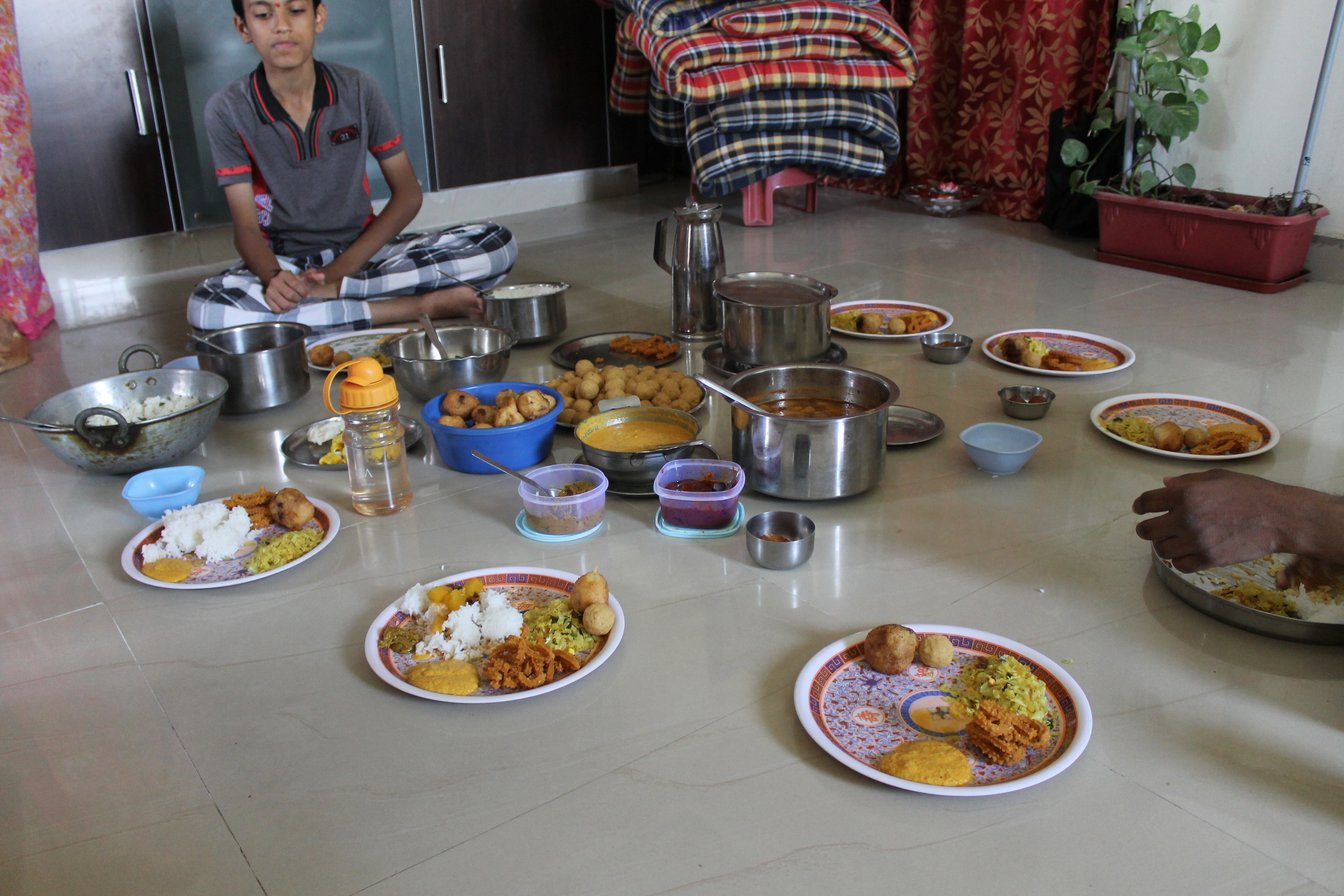
The next day, we celebrated Diwali, one of the biggest and most widely celebrated holidays in India,with our host family and neighbors. We feasted all day on white rice, lemon rice, curries, daal, roti, vada, peanut chutney, and tons of sweets like laddus, gulab jamin, and kheer. Then we spent the evening setting off fireworks and playing with sparklers. There aren’t many regulations on fireworks here, so it was actually quite frightening how many explosions were going off in the small alleyways and streets between the apartments in our neighborhood. Apparently Diwali is one of the most dangerous days of the year in India, and we even saw an apartment building on fire in the distance. We went up on the roof to watch the 360-degree view firework show going on for miles around us, but as the night went on, we all got headaches from the booming noises and smoke inhalation. Overall, my first Diwali experience seemed like a mixture of Thanksgiving, the Fourth of July, and Blitzkrieg.
IMG_5346

Our Diwali feast

In just a few days, after I finish exams, I’ll be heading to South India with my friends to explore the backwaters of Kerala, tea plantations in the Western Ghats, and the luxurious palaces of old kings in Karnataka. I’m anxious to start these adventures, but the excitement is bittersweet. When I leave for this trip, I’ll be saying goodbye to Hyderabad, the wonderful city that I’ve called home for the last five months.
IMG_5405

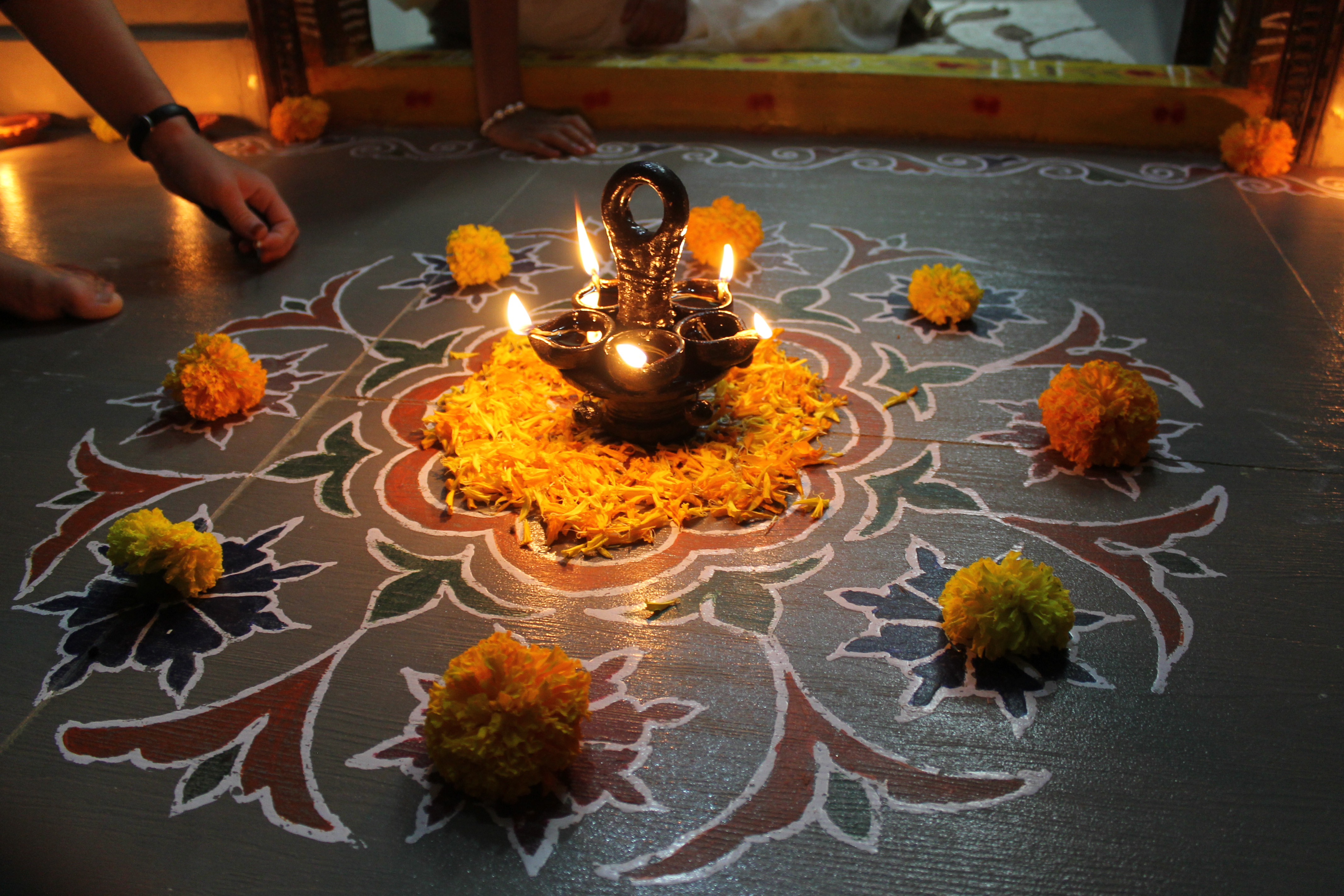
Diwali decorations – rangoli and diyas


Valparaíso

November 13, 2013

A good friend of mine from the University of Richmond is also studying abroad in Chile. His program is in Valparaíso, a coastal city about an hour and a half away from Santiago by bus. I mentioned in an earlier post that Neal came to visit me in Santiago so it was only natural that I traveled to Santiago to return the favor!

I set out for Valpo (an affectionate nickname for Valparaíso) this past Saturday. My plans to arrive early went awry so I did not reach the city until it was midday. I know I talk a lot about traveling in Chile in my posts but believe it or not this was the first time I traveled by myself. If you have noticed, all of the destinations I have mentioned in blog posts have been excursions with the study abroad group. The program was a bit rigorous in that we could not miss any classes. Travel time was strictly allotted to weekends but when you are living in the longest country in the world, you don’t get very far in a weekend. I am now in my month of research without any class obligations so I am much more flexible to travel. In fact, this weekend I am going back to Valle Elikura to visit my homestay family in the south and conduct some interviews that are relevant for my research. I also have not done traveling on my own thus far because I wanted to avoid becoming a tourist. All my travels so far have been, and will continue to be, for a specific purpose. I think this is a way I have personally tried to step away from typical ecotourism or ethnic tourism.

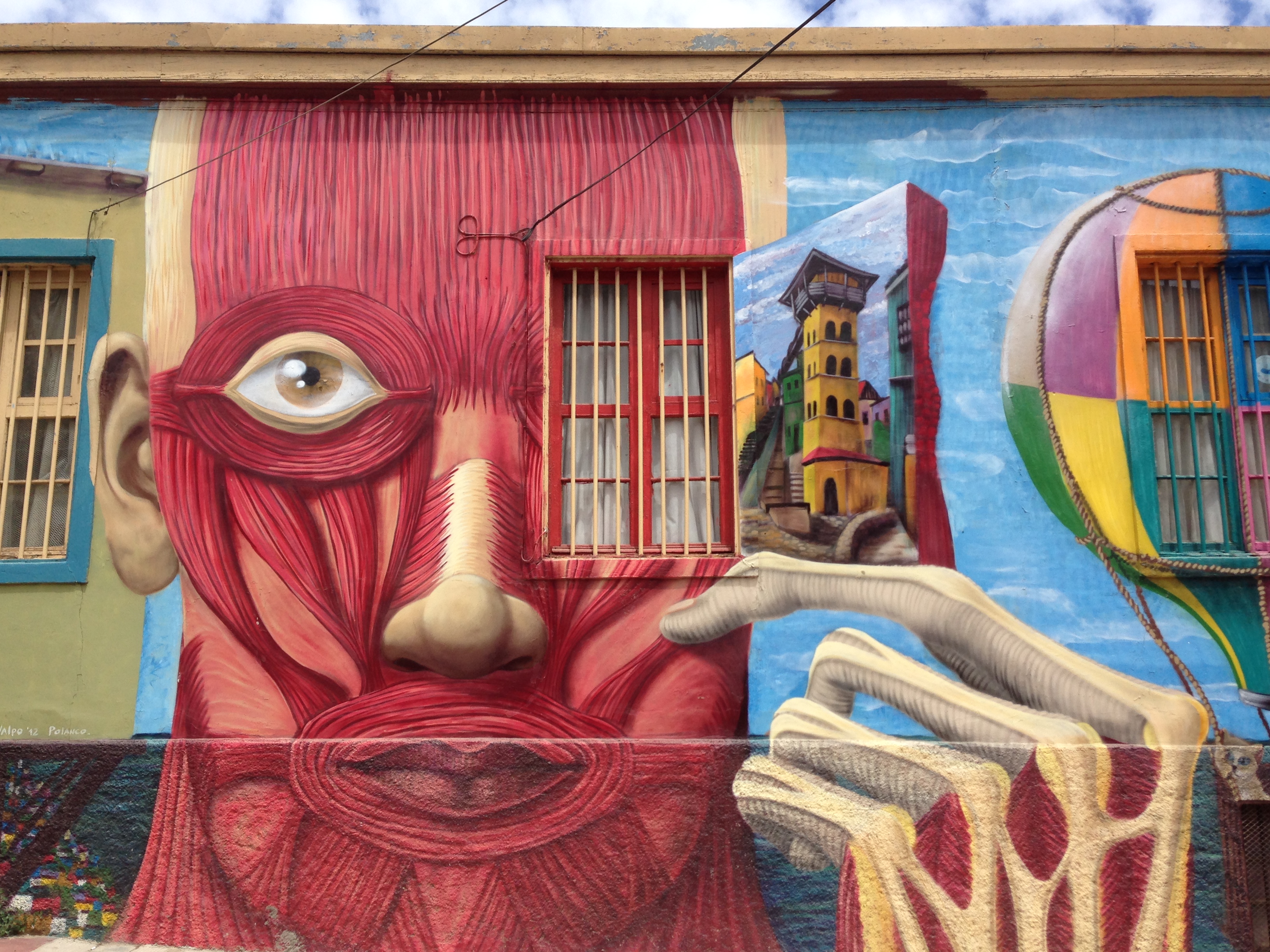
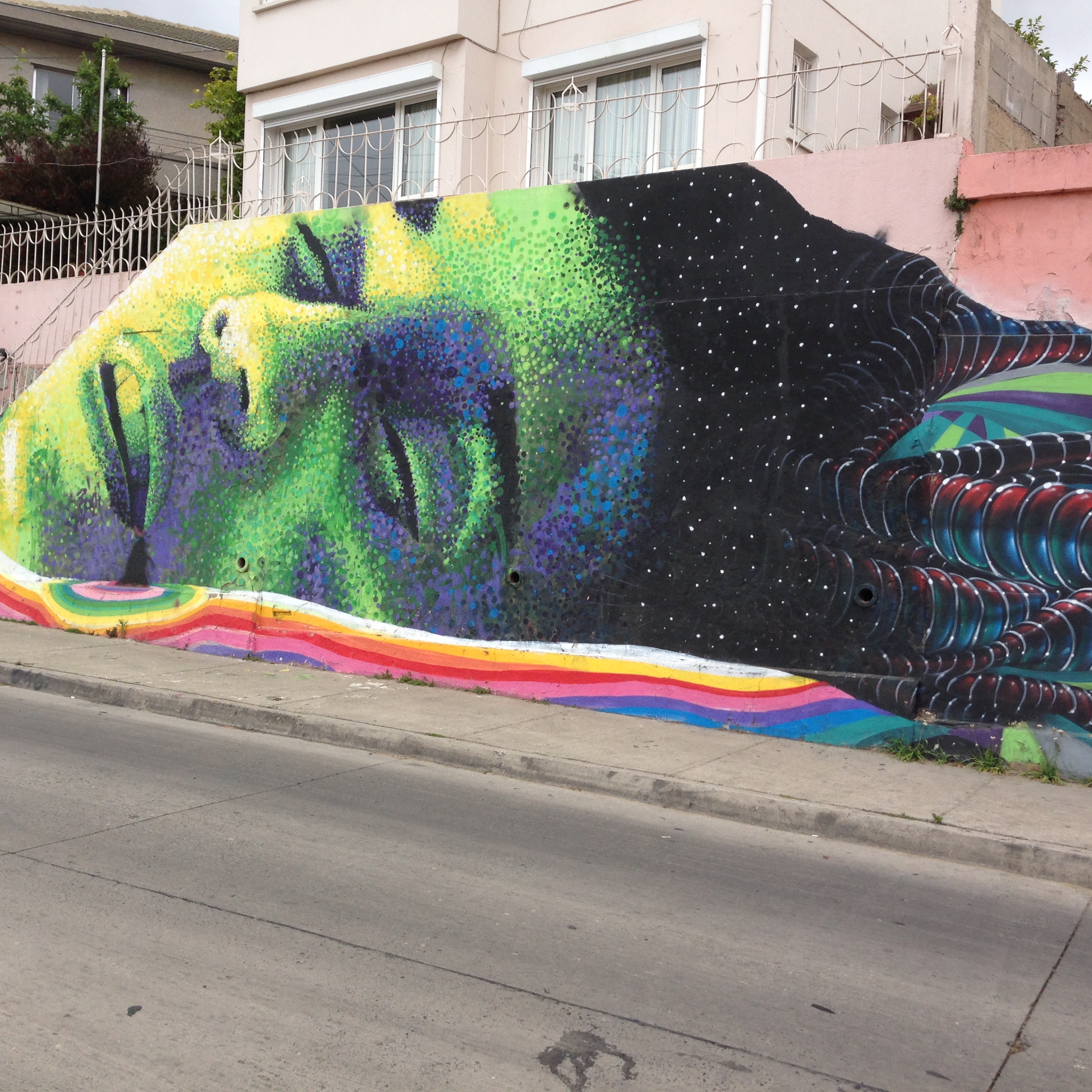
Anyway, Valparaíso is close enough for a day trip. I was really happy that I was visiting Neal in Valpo and not simply going to sightsee. Neal is also someone very aware of social and political dynamics in Chile and I knew I would “experience Valpo” through a particular lens. The first thing we did was hike up to a neighborhood in Valpo that is known for murals. Valparaíso in itself is known to have a lot of murals. Some carry particular social commentary and others are simply beautiful works of art. World-renowned artists have also crafted beautiful murals in the city. You can imagine the street art makes Valparaíso an incredibly colorful city. The neighborhood we visited is known as the most famous area for public art. The murals are simply drawn outside of private homes with the permission of the homeowner. Many times the mural engulfs the entire outer wall of the house.

mural #2

Mural

Examples of the many beautiful murals in Valparaíso

Valparaíso is a port city that is spread out almost entirely on hills. Any activity from going to the cemetery to the small neighborhood coffee shop five minutes away is a full-blown hike. One would go mad if they tried to orient him/herself around the city using street names. Those are arbitrary. I learned if you want to get somewhere, you pick out a reference point close to your destination and you head towards that direction. As you are walking, you have to constantly check your position in relation to the reference point and adjust your path accordingly.

stairs

The city has many stairs like these that people can use to “climb up” to other streets. They can get pretty steep!

Overall, I enjoyed Valparaíso. I think I would have been extremely happy to live there as well. The city isn’t too big to be overwhelming and cold, but it is big enough represent a lot of socioeconomic diversity. It isn’t too small where it may be “boring” or monotonous, but small enough to exude a strong and particular character.

I will definitely return for another visit.

View

Colorful Valparaíso


Diego in Brazil: It began as a class presentation…

November 13, 2013

Some minutes ago I finished my first in-class presentation on Brazilian Foreign Policy. I could feel all of my Portuguese vocabulary just flying away from my mind minutes before my presentation. I’m the only exchange student in my class and even my group seemed a little nervous not knowing how I was going to do. “What’s the summary of what you’ll present?” asked one of them. I suspect she was somehow testing my Portuguese…

But enough of that. The presentation went incredibly well and I’m happy to feel capable of improvising and analyzing Brazil’s involvement in Latin America during the Cold War in front of a large group. How did it happen? I’m still not entirely sure, but the topic is so interesting that I decided to share with you some history that has traditionally been ignored.

Read any history book on the political landscape of Latin America during the late 60s and early 70s and you will most likely be led to believe that Brazil played an almost-insignificant role in other countries’ politics. Historians and political scientists have typically pointed at the US for its involvement in the region as a hegemonic power interested in sabotaging any left-wing political victory in Latin America. A different language, culture, and history of colonization are all factors that have led us to conclude that Brazil hasn’t really focused its Foreign Policy on Latin America.

While most of the above may be true, it turns out most books won’t be precisely teaching you what really happened between 1965 and 1975. Brazil’s former president Médici – military dictator between 1969 and 1974 – believed that the ideological war in Latin America at the time was an internal conflict, consequence of the poverty and inequality that have historically characterized the continent. Médici concluded early in his time in power that any solution to the region’s ideological war would also have to be internal. During his administration Brazil participated in the overthrow of a democratically-elected leftist president in Bolivia, the weakening of Uruguay’s most important leftist coalition, and the training of military forces that would eventually overthrow Salvador Allende in Chile.

golpe_allende

Attack on the Palacio de la Moneda in Santiago de Chile on September 11th, 1973. Source: http://filosofiacr.wordpress.com/2011/09/12/salvador-allende-vida-y-muerte-la-cia-y-el-golpe-de-estado-del-11973-video/)

In 1971 Médici visited former president Nixon to motivate him to get even more involved in Latin America. Records of the meeting show that Médici left Washington quite unhappy about Nixon’s decision to not drastically increase the economic and military aid given to Bolivia’s and Uruguay’s right-wing regimes. It turns out that between 1970 and 1974 Brazil took the lead in the “fight against communism” in Latin America and constantly tried to get the US to pay more attention to the region. In September 11th of 1973, Salvador Allende suffered a coup d’état in Chile and this meant that, according to the Brazilian Foreign Minister at the time, the Southern Cone’s revolutionary “snowball had been reversed.”

medici

Médici, Nixon, and Kissinger meet in Washington in 1971. Source: http://impressao.wordpress.com/tag/nixon/)

A number of internal and external factors led Brazil to shift its attention away from the region after 1974. Pinochet in Chile and Geisel in Brazil would lead, respectively, the two countries on different paths towards a harsher military rule and more relaxed policies. It wasn’t until the 1990s that Brazil would regain such strong interest in Latin American politics.

Next semester I will start writing my thesis back in Richmond. I have decided to give a more historical touch to my examination of the Brazilian-Peruvian international border in the Amazon region. As it turns out, Brazil’s involvement in Latin America has been much more important than what I once thought. Among all of the academic lessons I have gained while studying abroad in Brazil, this may be the one that will have the greatest impact in years to come.

If you are interested in reading more about Brazil’s involvement in Latin America between 1970 and 1975, you can follow this link (http://dx.doi.org/10.1080/14682745.2011.641953) to the article by Tanya Harmer (2012) that was the basis of my presentation and this blog entry.


Alyssa in New Zealand: The end

November 12, 2013

It seems that I’m constantly on the move. I never run out of things to do no matter where I am. And it’s saddening to think that this will all come to an end very soon. The day I fly out from New Zealand is going to approach quickly and I won’t realize this until the actual moment comes.

The past couple of weeks have progressed much quicker than I thought. It felt liberating to finally finish my last exam because from that point on, I did not have to worry about schoolwork anymore. All I had to think about was what I was going to do with my remaining time in the country. I took advantage of my free time right away. I had made plans to leave after my exam to travel the north part of the South island, which was a 900 kilometer trip from Dunedin.

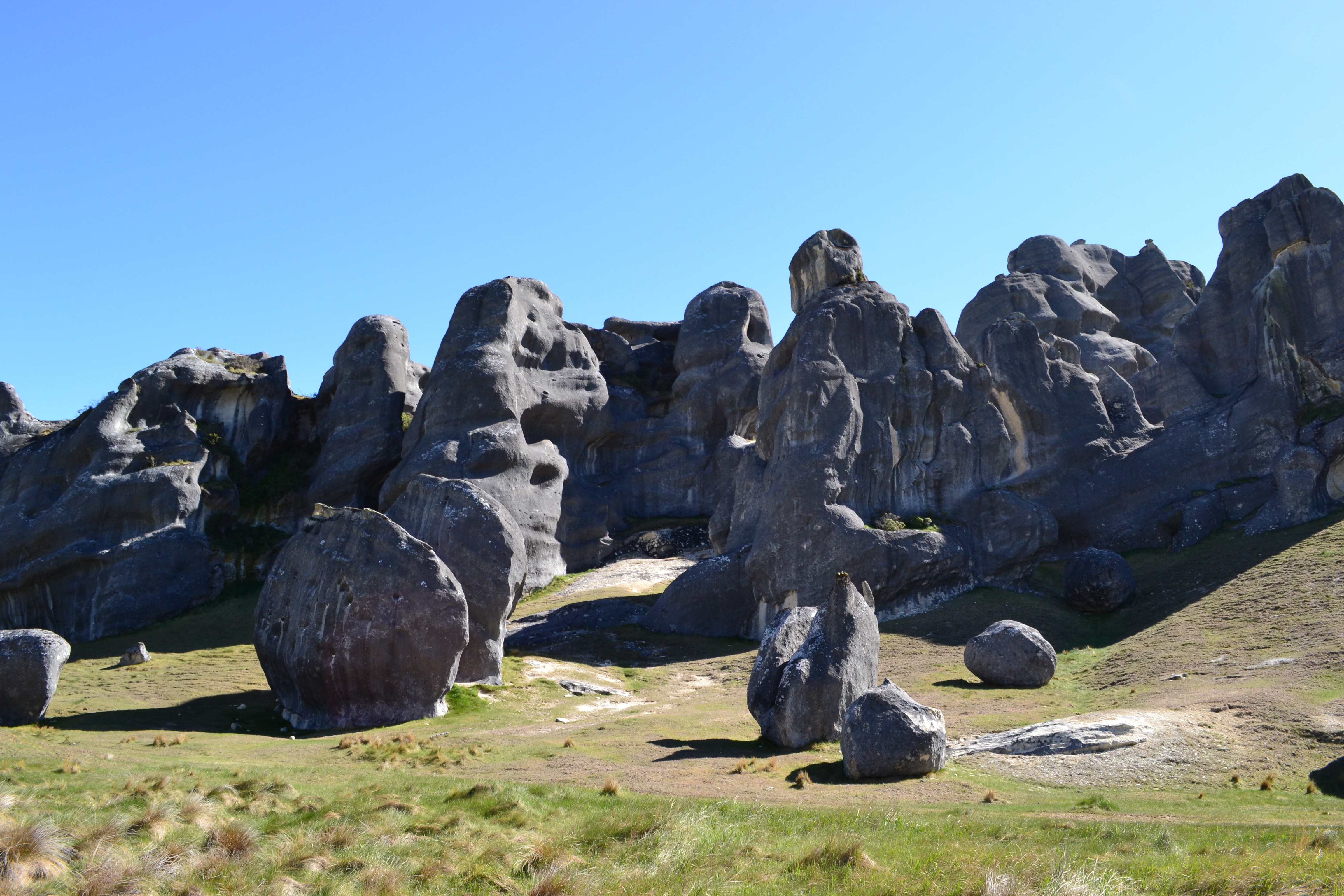
As my three friends and I drove in the northern direction, we made stops along the way. After five hours of driving, we ventured out to Castle Hill, which had been named the “Spiritual Center of the Universe” by the Dalai Lama. The location seemed to be at absolute peace and serenity. As we walked towards the entrance, we were greeted with vast green land which was completely occupied by several limestone boulders. Each stone varied in size, for they ranged from 8 to 40 feet. The area was the epitome of New Zealand’s climbing scene. Every corner we turned, there was a new bouldering opportunity that we were drawn to. It became our glorified playground and my favorite place that I’ve visited in New Zealand.

DSC_0012

Castle Hill

DSC_0010

The ideal location for climbing and bouldering

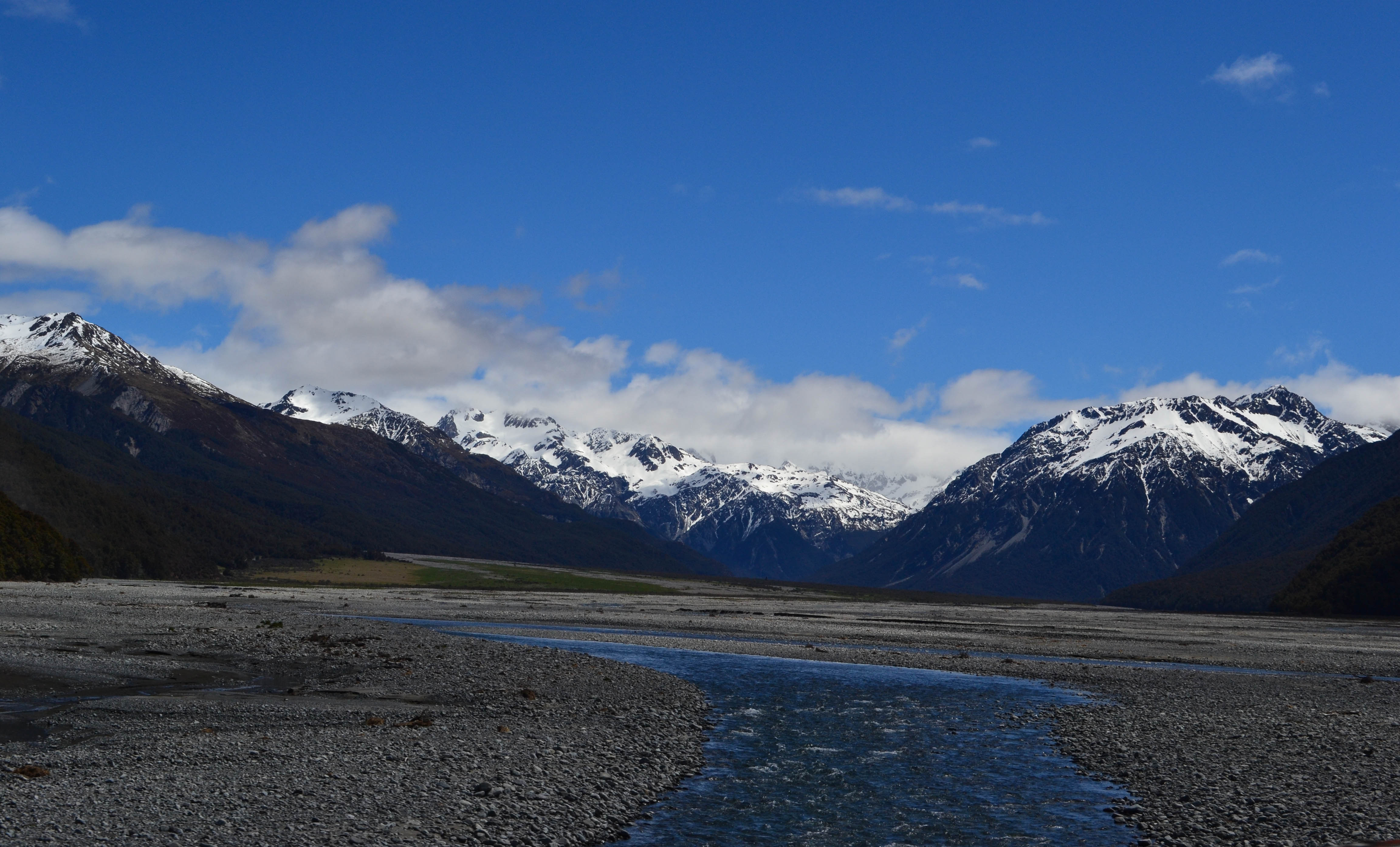
As we proceeded north, we drove through Arthur’s Pass National Park, a scenic highway route. The further we immersed ourselves into the valleys, the more impressive and vast the mountains became that surrounded us. Just when you thought you couldn’t imagine anything bigger, something even more immense came along. Such remarkable scenery reminded me of how much I haven’t seen, and I became more than grateful to find myself venturing out to places that I had never thought about encountering.

Abel Tasman National Park was our final destination, for we wanted to tramp one of the Great Walks, the coastal track. It is located in the northwestern part of the island. The weather was noticeably different from the weather in Dunedin. The temperature was warmer and the sun wasn’t constantly hiding behind the clouds. The track as a whole was fairly easy mostly because there was very little elevation. As we hiked the track, we came across several different accesses to beaches, which made it even more enjoyable. One could almost say that it was more relaxing than a strenuous activity for us.

abel (1 of 1)

As we drove through Arthur’s pass, I captured this shot when we were crossing over a bridge

DSC_0073

Arthur’s pass

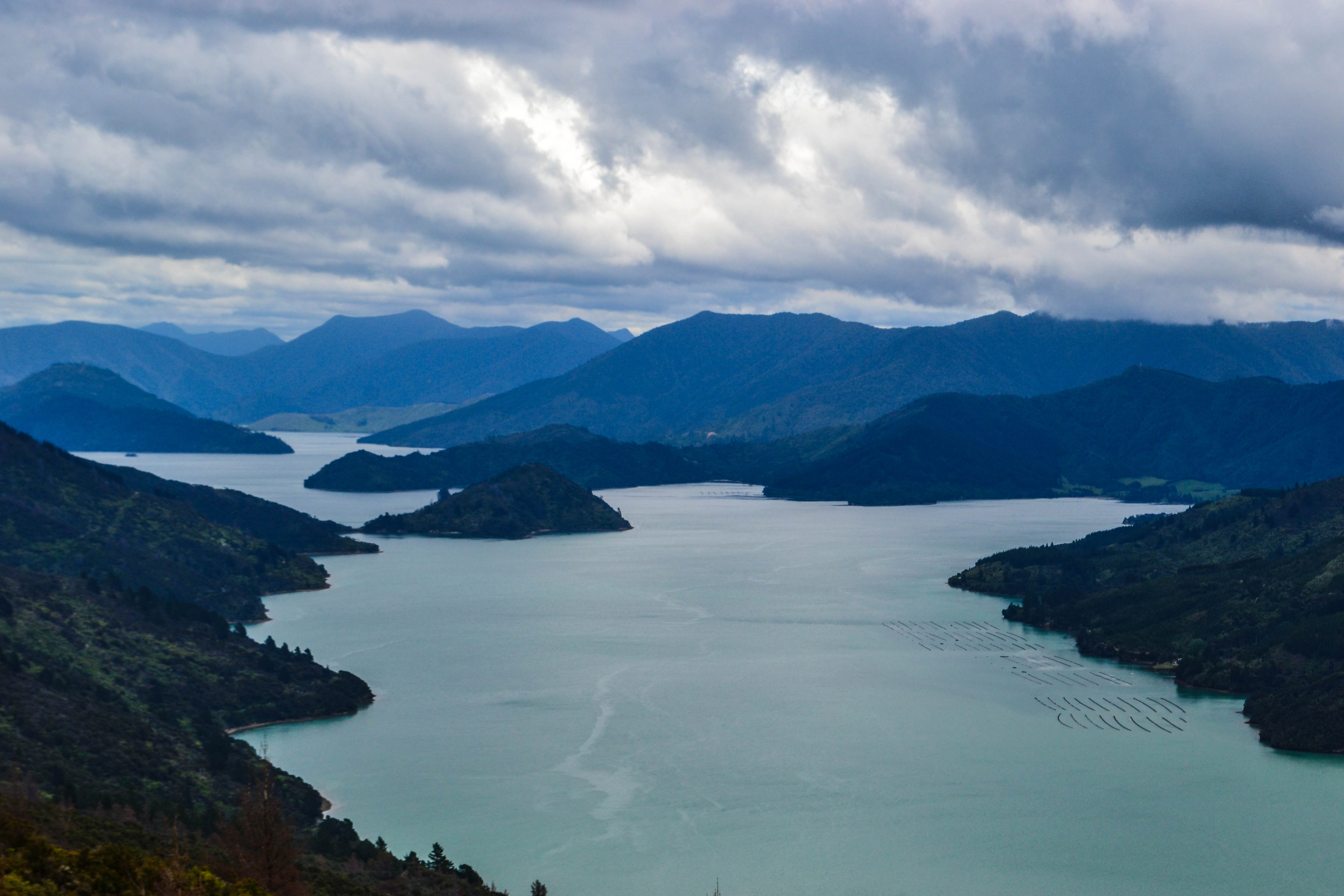
Once we finished the track, we traveled east to Picton so that we could start another tramp, the Queen Charlotte track. Since we didn’t have the time or stamina to do the entire track, we decided to start in the middle where we would get the best views of the Marlborough Sounds. As we reached to an elevation of just over 400 meters, we concluded that we could have not picked a better spot to be on the track. Out of 71 kilometers, we chose the perfect place.

abel9 (1 of 1)

Marlborough Sounds

After six days, we made our way back to Dunedin. The thought of leaving has finally become a reality now that my packing has begun. My flight to return to home is November 21st and I leave Dunedin with my flatmates on the 10th. For those remaining 11 days, we will be traveling the entire North island. It will be our last and final stretch of traveling in New Zealand. The Auckland airport will be where we depart back to our home countries.

Tonight is my last night in Dunedin. The town has become not only the place where I reside, but it has also become my home. Traveling around in New Zealand would not have been the same if I had not been with the people that I have met here. As I’ve gotten to know them, they have become an important aspect in my life as we have all supported each other regardless of the fact that we are all from extremely different places and cultures. We all came to New Zealand for our own yet similar reasons, all of which have naturally forced us to make the experience much more meaningful in a way we never imagined.

Expectations are never met. We can never be absolutely certain about anything until we have experienced it for ourselves. Thus, it is best to go in without any expectations or set plans. Keep an open mind. You never know what changes and occurrences will present themselves, for it could potentially be for the better in the end. If you knew everything that was about to happen to come, to what degree would you actually enjoy it?

Seeing that this is my last blog post for the semester tells me that the journey is finally coming to an end. I highly enjoyed writing about my study abroad experience. It has been recorded and now I have something to always look back on to reflect the entire semester. Thank you for providing me with this opportunity, Richmond; you have helped me make my memories and experience permanent.

With my last words, I will say that if you have any desire to study abroad, do it. Some inconveniences may present themselves, but they can be solved. As cliché as it sounds, the experience as a whole is unlike anything you could ever imagine and there is no reason for anyone to miss out on that. No one should be deprived from seeing the world.

To consider myself lucky is an understatement. Thank you to everyone who has made my time more than enjoyable over here in New Zealand. As for all the other study abroaders, it will soon be time for us to go back home and return reality back at school.

Not all those who wander are lost.”
J.R.R. Tolkien, The Fellowship of the Ring


Mel in Chile: The South Part 3

November 8, 2013

Last time you heard from me, I finished writing about my homestay with a Mapuche family in a small valley called Valle Elikura.

We left Valle Elikura early Monday morning. We spent the next part of the trip in Dichato, a small town in the southern coast of Chile. We also took two classes in Universidad de Concepción about the economic, political and social influence of the forestry industry.

Before I start talking about the activities during the final days of our trip, I would like to share how I felt after Valle Elikura.

I think it’s safe to say when we travel and spend time with other people who are culturally or ethnically different than our own group, we tend to hope our time with them will attend to some questions, or curiosities. Likewise, I hoped that my time in the homestay in the Valle Elikura would answer many questions I had thought of in preparation for the trip. How did they feel about being surrounded by the forestales (general term for forestry companies)? Is there a space for the community and the forestales to discuss terms of mutual agreement for future plans? How had the concept of “ser Mapuche” (literally meaning “to be Mapuche) evolved through history? In which ways did this identity adapt to the political context of each time period? What are the major discontents of the Mapuche community in Valle Elikura with the Chilean state?

I refer specifically to the community in Valle Elikura because I wanted stay away from the fallacy of assuming that the Mapuche are a homogenous group. I did assume that everyone in Valle Elikura would share the same identity, have similar political views, and generally organize around the same “vision” for the community. I quickly found out my notion was embarrassingly wrong. To begin with, most of the families in Valle Elikura have one Chilean parent. My host father was a priest in an Evangelical church while the director of our homestay expressed great discontent with the infiltration of Western, monolithic religions in the Mapuche community. As I became aware of these dichotomies, I raised questions that tried to go deeper into learning more about the people living in Valle Elikura.

The more I tried to “learn” during the five days of my homestay, the more I felt I didn’t understand. It’s as if I walked into a cave. In the beginning, I had a torch with a small fire. I could see clearly as far as the light from the fire would allow me. But, as the fire grew and the light became bigger, I realized the immensity of the cave.

At the end of our second day, I wrote ten pages front and back of reflection in my journal. My mind never stopped thinking.

I never got to the bottom to any of my questions. It is impossible.

In this post, I wanted to share a bit of my personal reflection of the trip.

It was a milestone experience. I didn’t answer questions. It was the first time I put incredibly effort into resolving my inquiries and realized I could not do it. I could not reduce thousands of years of history and social processes and point to one fragment to say “this is the answer.” This may sound like an amazing and valuable epiphany, and it is. But when I was just understanding the complexity, I was very discouraged that I would never “fully” understand.

In my own opinion, I say I have a passion for the pursuit of knowledge. When I realized this pursuit would raise more questions than it answered, I became very cynical. I thought, “If I will never fully understand these concepts, then I should stop wasting my time trying.”

I am thankful I took some time to track where I learned to relate obtaining answers with successful pursuit of knowledge. I need not look any further than my current curriculum as a university student. My classes thus far have taught me to look for answers. They have taught me that assets should always equal liabilities. They taught me to model consumer behavior according to models and mathematical equations. I think somewhere in my 14 years of schooling, I learned to appreciate and value linear ways of thinking. The problem is at the top and through several processes of analyses and deconstruction, I arrived at the bottom; “the answer”.

The experience in the south broke that nonsensical concept.

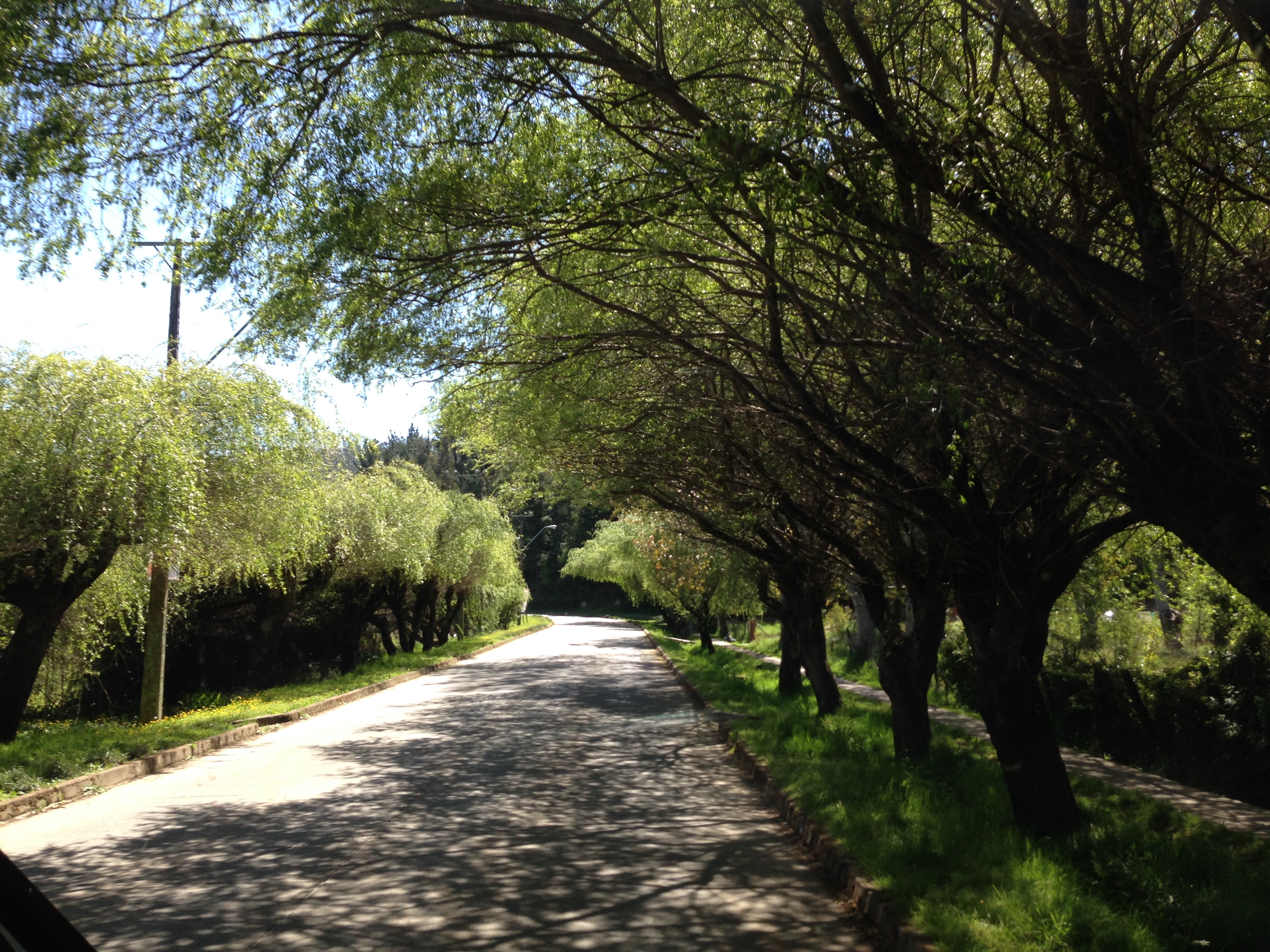
road

On the way to Dichato from Valle Elikura


Diego in Brazil: A day in Ipanema

November 8, 2013

It’s been exactly three months since I first came to Rio de Janeiro. Before starting my study abroad program I had spent the last half of July working in Lima and the Peruvian Amazon. On August 5th I finally took a bus to Lima’s airport and flew during the night to the Galeão International Airport in Rio. Just yesterday I was having dinner with my host family and we talked about that first day when I moved into their apartment.

Three months and today is the first day I post an entry about a trip in Rio! As I have written several times before, one of my main goals for my program was to avoid becoming yet another tourist in this city. I understand why many friends tend to disagree with my goal, but having this objective in mind was a mix of previous experiences in other regions of Brazil, some geography and sociology classes, and the desire to have a different approach towards one of the world’s most dynamic metropolis.

After countless conversations with my host family, classmates, professors, and many people I have met so far, I finally felt ready to visit and write about some of Rio’s neighborhoods. So here it goes.

Last weekend I packed a backpack and left my apartment early in the morning. I took a bike (every month I pay about $4.00 to have access to one of Rio’s biking programs) and began my trip to a neighborhood in Rio’s southern area: Ipanema. I had planned to visit a number of places that my host family had suggested, but I mainly wanted to spend a day walking around Ipanema’s streets without a set destination.

Ipanema1

A small market with great fruit in Ipanema.

You may recognize the name Ipanema. The song “Garota de Ipanema” (“The Girl from Ipanema”), written and composed by João Gilberto and Stan Getz in 1962, made the name of this neighborhood widely known (here’s a version of the song for you to enjoy:

I biked for about 25 minutes before reaching Ipanema and left my bike to start walking. My host family truly wanted me to visit the Praça Nossa Senhora da Paz and the Igreja Nossa Senhora da Paz, so that is where I went first. Thinking about this entry I stopped to look for “good” pictures but in the end decided to submit the ones with cars, buses, and people walking through the church and park. In my experience, contrasting images of nature, people, and culture is one of Rio’s main characteristics.

Ipanema2

Not a great picture of the Nossa Senhora da Paz church, but the contrast is certainly common in Rio’s streets.

I bought two oranges from a street market and sat in the park to read “Perto do Coração Selvagem” (Near to the Wild Heart) by Clarice Lispector – a fantastic writer. Unfortunately it was a rainy day so reading outside was not a great plan. I entered a small shop to buy water and asked if they had any suggestions for my trip. The guy in the shop sent me to visit the theater Rubens Correa and the cultural center Laura Alvim, and of course I followed his instructions. As I visited these and other places I kept asking people if they had any suggestions for my day in Ipanema. I ended up having lunch in a sandwich-shop with incredible natural juices and a nice couch to read.

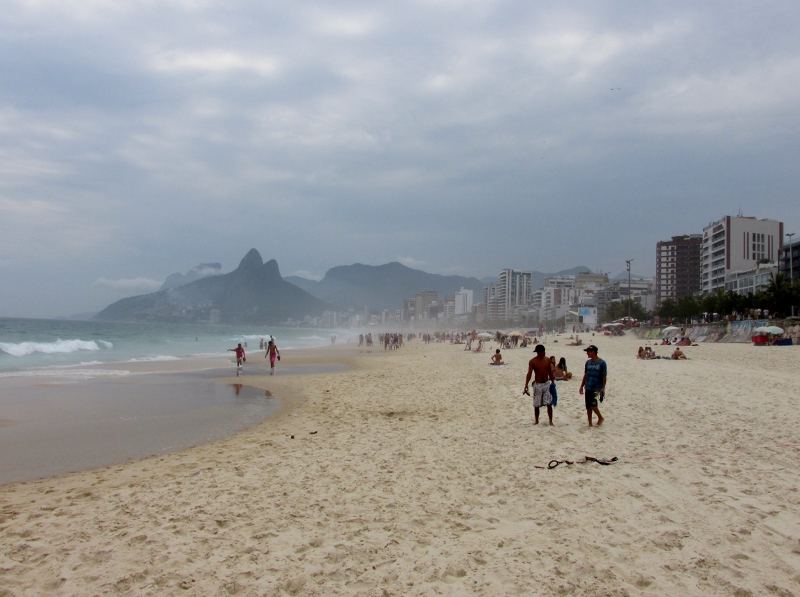
I finished Lispector’s book in the afternoon and kept walking. The weather had not improved much but several people were now in the beach (my guess is that the temperature never dropped below 70 degrees.) I knew friends and family would appreciate a picture or two from Ipanema’s beach so I walked by the beach for about forty minutes. When I finally reached the end of Ipanema (where Copacabana starts) I took another bike and began my trip back to my apartment.

Ipanema3 (2)

And of course, Ipanema’s beach on a cloudy day.

As I walked through this neighborhood I kept thinking about my “don’t be a tourist” goal. Was it worth it? Did it make any sense to wait some time before going on these trips? Would reading Lispector’s book in a sandwich-shop have been any different two months ago? Well, I suppose any “evaluation” of my goal will have to come from my overall experience in Rio de Janeiro. Two months ago I wouldn’t have known that, following a common cultural dynamic in the country, Lispector’s modern language had been widely criticized throughout Brazil as an attempt to move away from other more traditional styles. It may seem as small detail, but understanding why different literary circles in Brazil reacted differently to “Perto do Coração Selvagem” is the result of countless conversations during these three months.


Rhiannon in India: Observing the many religions of India

November 6, 2013

A lot has been changing here recently. Finals are quickly approaching, the end of our program is almost a month away, and believe it or not, it is getting a little cooler here in Hyderabad. Right now, we are busy reviewing for finals in our classes, making travel plans for our last trips around India, and preparing for the Cultural Show, a performance that the Study in India program puts on at the end of every semester for the entire university. SIP students will perform things they know from home or something that they have learned here, like sitar or traditional dance. According to our advisors, it’s a huge hit among the university community and the auditorium is always packed. My sitar class will be performing two songs in the show, one traditional raga and one popular Bollywood song from the movie Aashiqui II. Together, the songs total 15 minutes of straight playing time, so it’s safe to say my fingers will be totally numb by the end.

Because I am leaving India in only one month, I have been spending more time reflecting on what I have learned in my time here – what has fascinated me, what has confused me, and what I am still interested to learn more about. A few weeks ago, CIEE took us to Varanasi (formerly called Banaras) for a long weekend trip, and although I have been interested in the many religions of India since I arrived in July, being in Varanasi made me even more fascinated by the complexity of the subject. Just as in any other part of the world, religion is a complex part of Indian culture that is impossible to boil down to one blog post, but somehow India strikes me as even more complicated than many other places in its religious culture. It seems impossible for an outsider like me to understand the innumerable traditions, values, festivals, and rituals of each of the religious groups present in India, especially because each part of the country has created its own unique version over the centuries. What’s more, religion or spirituality is much more present in everyday life here than it is in the US, so I am surrounded by constant reminders of its importance and complexity.

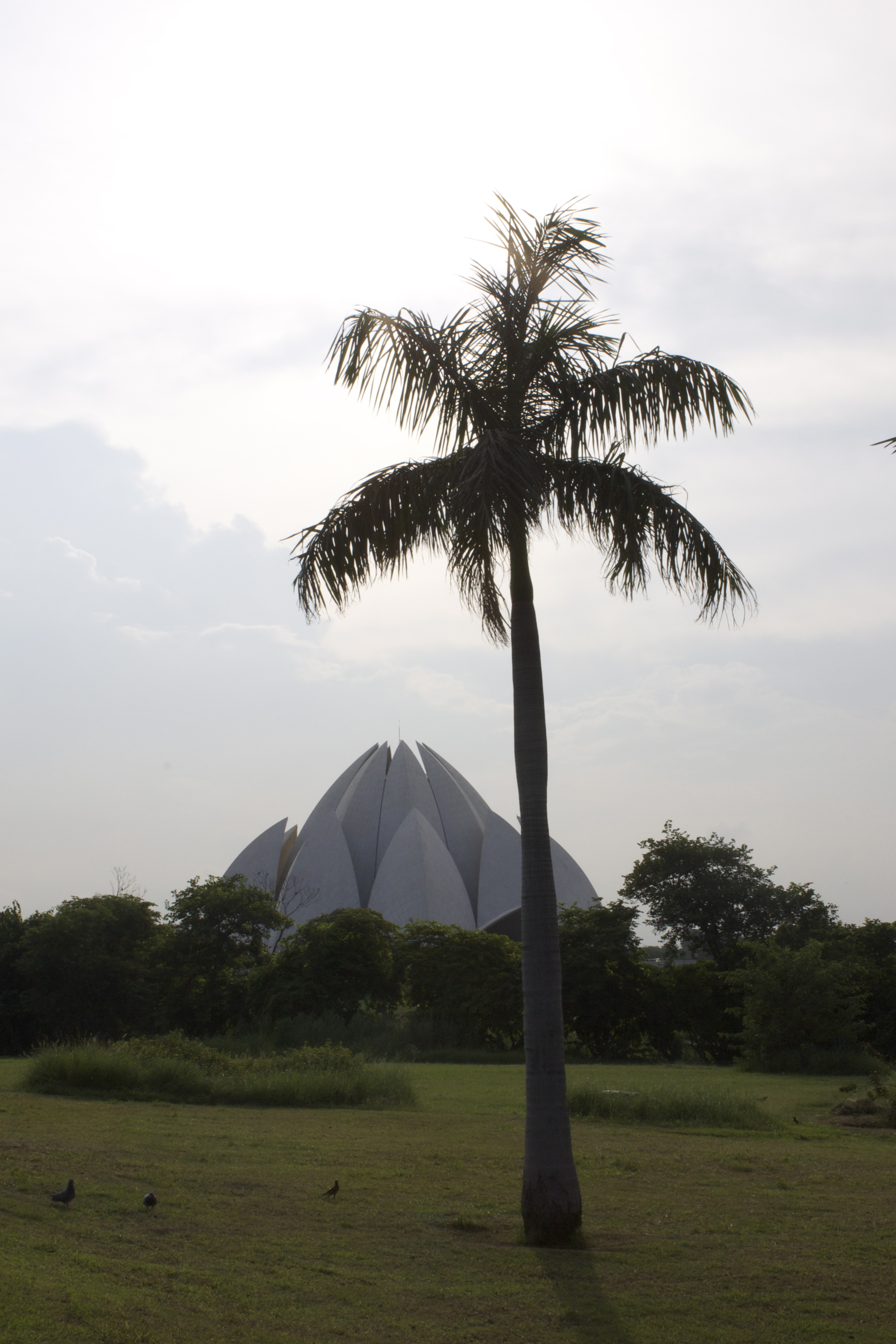
IMG_2941

The Bahai Lotus Temple in Delhi

Of course, religion is different for every person in India, and there is no way I have seen even a small part of all there is to see. I have met Hindus, Muslims, Christians, Jains, Sikhs, Buddhists, and I’m sure many others. Instead of attempting to make sense of it all, I would just like to share the experiences I have had over the past few months that show just how integral religion is to Indian culture.

IMG_3415

A small shrine on the side of the road in Pondicherry

As Hinduism is the dominant religion in India, there are references to Hindu gods everywhere you turn. There are Hindu temples along the roadsides, tucked away between houses in neighborhoods, and among the rocks on the hillsides. There are shrines to one god or another in almost every store and restaurant, puja rooms in almost every Hindu household, and pictures or statuettes of deities in many taxis and autos. As I said before, each region of India has molded their own religious traditions, so people always joke that if we celebrated every religious holiday in India, we would never have to go to school or work. Adding to this is the shear number of gods recognized in Hinduism. There are millions of Hindu deities, but most Hindus will say that this is because there are just many names for each of the main gods.

IMG_4080

Men performing morning puja at Assi Ghat in Varanasi

As I said, our trip to Varanasi last month really solidified my interest in religion in India. Varanasi, nestled on the edge of the Ganges River, is the “Mecca of Hinduism” and full of religious temples, stupas, and shrines to various Hindu gods and the Buddha. It is one of the only places in India that is famous for its sacred rituals concerning all parts of the life cycle. The Ganges River, named after the Hindu goddess Ganga, is the holiest river in India, although all rivers are considered to be auspicious because of their cleansing and purifying qualities. All Hindus aspire to visit Varanasi and bathe in the Ganges at least once in their lifetime to be cleansed of their sins. Unfortunately, the Ganges has now become one of the most polluted rivers in the world. Families unable to afford cremation often put the bodies of the deceased in the river anyway, and you can see trash lining the water’s edge as you walk along the riverbank. However, this doesn’t deter many followers of Hinduism and other religions that worship the Ganges from bathing in the water, or even drinking it to cure diseases.

There are over one hundred “ghats,” or long, steep steps leading down to the water’s edge, along the riverside in Varanasi. These ghats are used for bathing, daily puja, and death rituals. At many of the ghats, there are cremation pyres, where the bodies of the dead are burned and their ashes spread into the water of the Ganges, allowing that person to reach Moksha, or the liberation from the reincarnation cycle of life and death. As we explored the city that weekend, it seemed like every 20 minutes we saw a funeral procession moving through the narrow, crowded alleyways toward the river, with covered bodies laid out on stretchers carried by two men. At first all the talk about death was a bit depressing, and I wondered if this process of pushing through the crowds of people was disrespectful to the deceased. However, I came to realize as I watched this happen many times that the procession through the holy city to the river is a very sacred part of the death ritual.

Because of these rituals, many Hindus and people from other religions move from all over the world to the holy city in order to die and be cremated by the Ganges. As a result, Varanasi has become a microcosm of India, comprised of small neighborhoods for people from each region of the country. Even the way each of these groups practices Hinduism – the gods they worship, the types of temples they build, and the rituals they conduct – are very different, so moving around the city quickly becomes a lesson in the cultural plurality of India.

IMG_4081

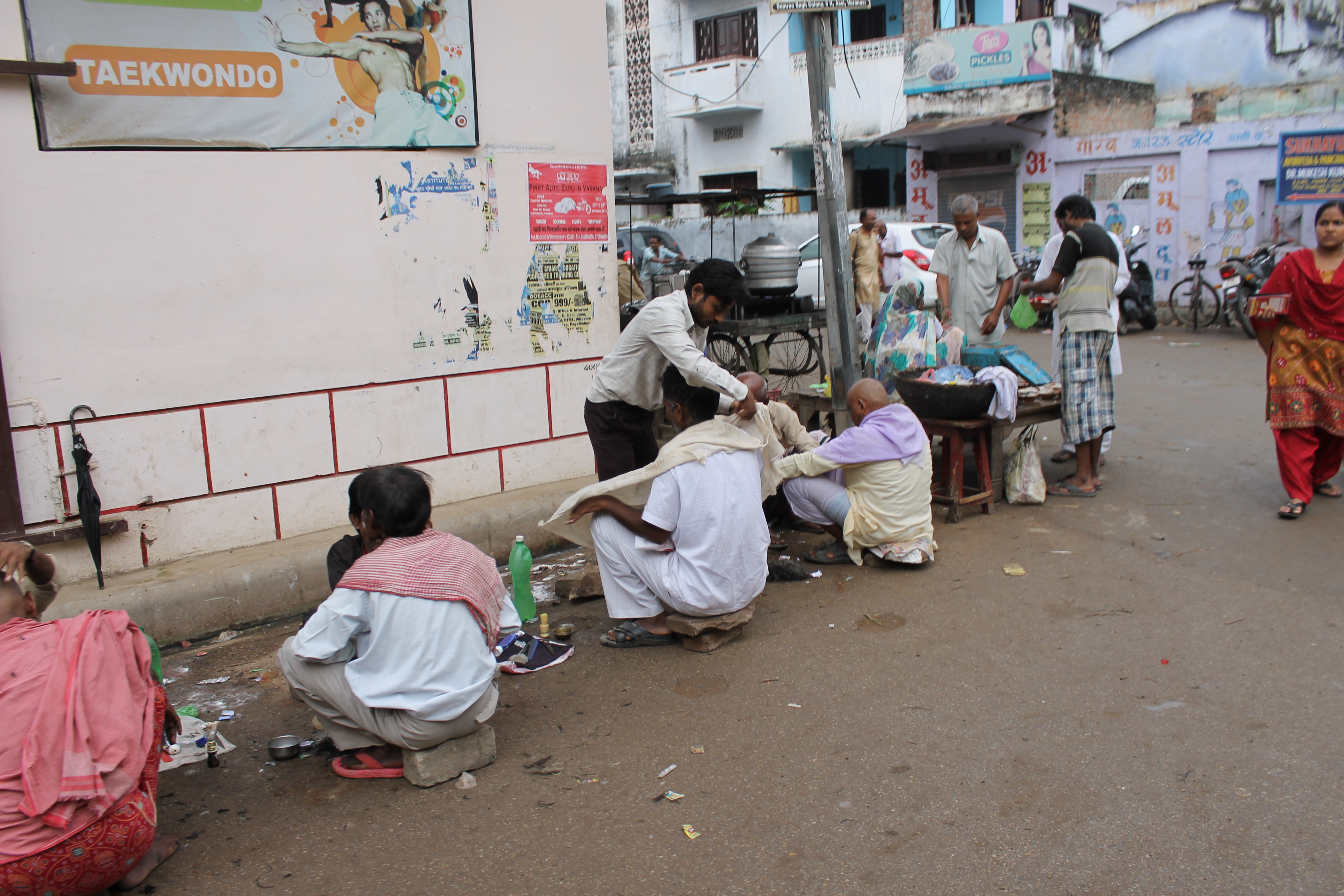
Men having their heads shaved on the street for Pitru Paksha, a 16-day period when Hindus pay homage to their ancestors

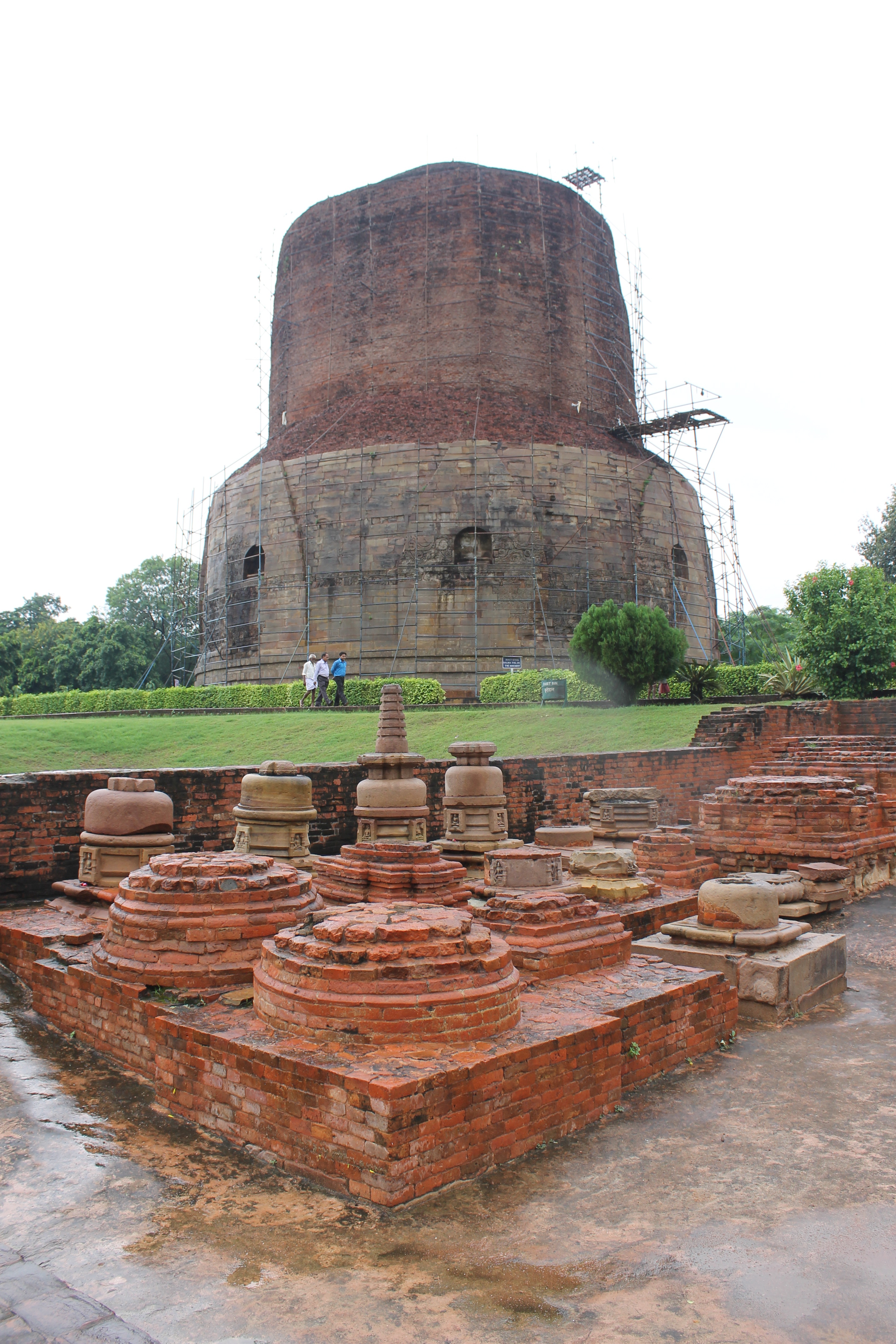
We also went to Sarnath, the sister city of Varanasi where the Buddha gave his first sermon and now home to a Buddhist stupa and a sapling from the Bhodi tree under which the Buddha found enlightenment. A stupa is a solid mound of earth, stone, or brick of any size, usually containing relics from the Buddha himself, that is used as a meditation site for Buddhists. We have seen many stupas while we have been in India, and most of them contain relics (usually ashes) from the Buddha. At first, I thought it was very curious that, although Buddhism originated in India, there are very few Buddhists in the country, and instead it is practiced mainly in Sri Lanka, Nepal, Thailand, and other Asian countries. But I learned from a few friends here that in India, Buddhism is not considered a religion separate from Hinduism. Rather, the Buddha is considered a Hindu sage, and his followers in India consider themselves Buddhist Hindus. It was not until the ideology spread to other countries that it became a religion in itself.

IMG_4180

The Buddhist stupa in Sarnath

Although Hinduism is the main religion in India, Hyderabad is actually one of the largest Muslim centers in the country. As you go towards the Old City in the center of Hyderabad, you will see more mosques, men wearing taquiyas (head coverings), and women wearing hijabs or burkas. Even from our apartment, we can hear music from the Hindu temple and the call to worship in Arabic from the Mosque in our neighborhood. The Old City has a large Muslim population because Hyderabad used to be ruled by the Nizams, an Islamic monarchy, from 1724 until 1948. This mixture of Islamic and Hindu culture makes Hyderabad an especially interesting place to live.

I didn’t intend for this blog post to be a boring lecture on religion, but I hope that it shows just how important religion is to the vast majority of people in India. Because we are surrounded by it every day as we are studying here, it has become something we must learn about – whether we like it or not. I know I am not alone in my frustration over which Hindu god did what, what religious holidays we are celebrating practically every week, or the reasoning behind the rituals that we witness everyday. But becoming a part of these things has been a wonderful opportunity that I could have never had at home.


Mel in Chile: The South Part 2

November 6, 2013

For those of you who have been following (don’t worry, I don’t have high expectations. Kidding- I actually suspect hundreds of thousands of people read my blog. Wow this must be the world’s biggest parenthetical insert) this post “The South Part 2” is the second of a three part series that reflects on the ten day excursion I took with my program in the South of Chile.  I apologize to readers who do not like long sentences.

We left Ralco after three days and two nights of relaxation as well as an hour long research methods class sitting on grass, in a circle, with a mountain split three ways as the background.

We headed for Valle Elikura. This valley, located close to the Pacific Ocean, between Contulmo and Cañete, has a population of about two thousand. Valle Elikura is historically territory that belongs to the Mapuche indigenous peoples. While there continues to be a strong Mapuche population, many of the families are also mixed with one of the parents being Chilean. Here we participated in a homestay for five days.

lake

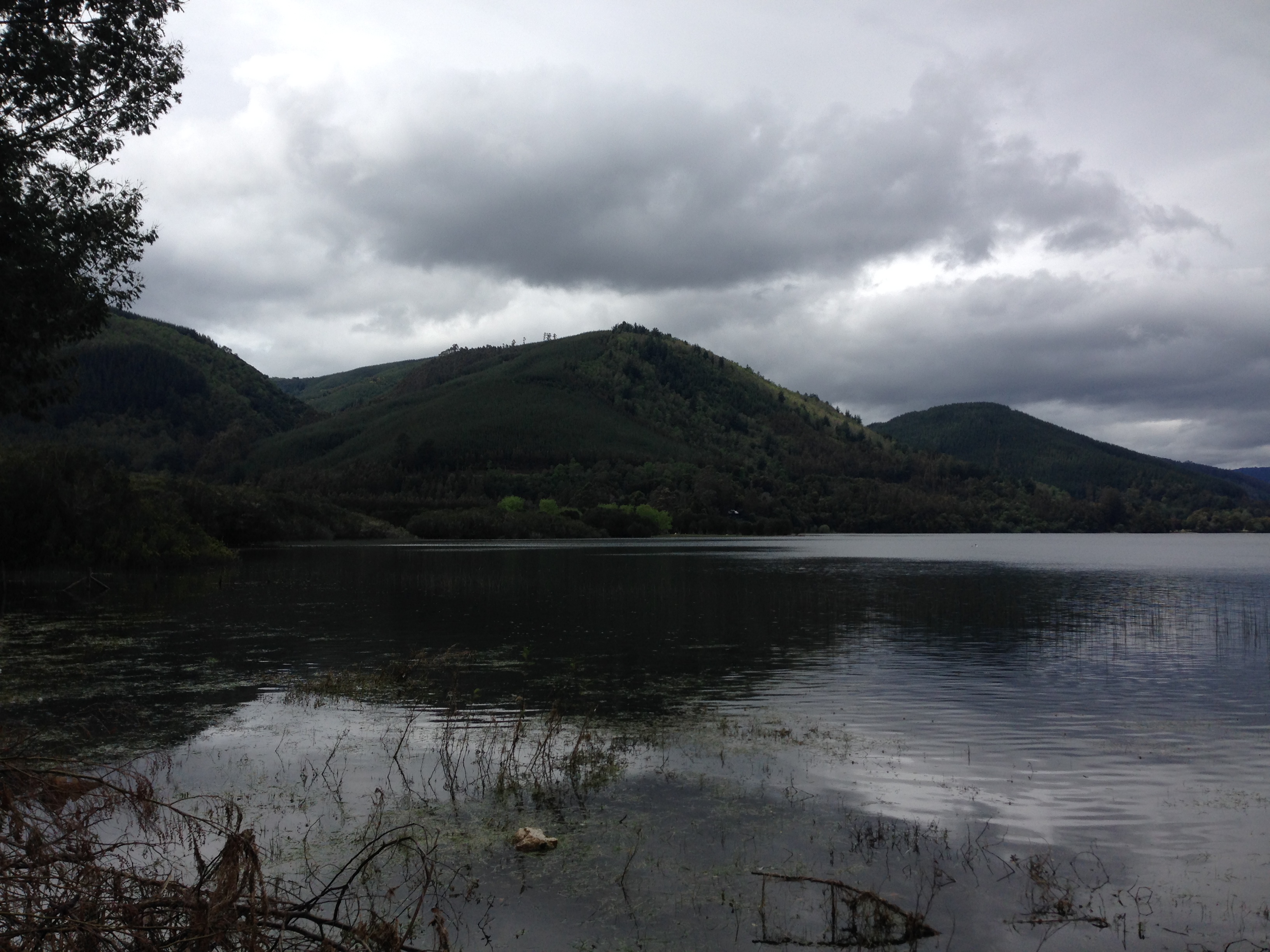
A lake in Valle Elikura

During the day we had several planned events as a group; lectures, hikes through native forest, discussions with community members, community work, and most importantly time to be with our host family. Many families in the community have built cabins on their own property where they receive tourists. We were broken up into groups of two or three and each group lived in the cabins. The cabins are separate from the main house, but all we spent a lot of time with the family during meals and free time.

An important reason we traveled to Valle Elikura was to learn about the concept of community tourism. Many of us have traveled outside of the country. In these instances we have all participated in tourism where we experienced a different culture. At first glance, tourism seems as nothing more than exciting new adventures. Through this program, I have studied the legacies and implications of tourism and came to realize some unsettling characteristics.

Many times tourism, especially showcasing “other” ethnicities, resonates with colonial legacies. I will give some clearer examples.

1. Recently wed US couples travel to Fiji and are greeted by locals dressed in “traditional attire” and presented exotic drinks.

2. Twenty something young women step out of their comfort zone and take a much deserved vacation in India where they ride an elephant and get henna tattoos

3. Bold backpackers arrive to the desert village of San Pedro de Atacama and walk around the dirt streets of the village center passing through stores with “hand made/local” products, touring agencies, restaurants, and hostels made of adobe. Meanwhile Atacameño people, whose culture is being replicated for consumption, are nowhere to be seen.

I hope you get my point. Most times, the purpose of tourism is to explore, or more directly, consume, a different culture. The colonial legacy comes mainly from two circumstances. The first is that many times tourism is imposed on communities. The decision to welcome tourists in particular territories originates from higher political or economic agencies. Touring agencies offer services, companies build nice hotels, and the local people in the stores selling “artisanal products”. Tourists are not aware that the “local” people selling artisanal souvenirs are simply hired to sell. They do not own the store and they did not make the product. The souvenirs may not even come from the culture. The overwhelming majority of profits generated from tourist related activities are channeled to national or multinational companies. Another source of the colonial legacy in tourism becomes apparent when we look at the characteristics of the tourists and of the people in the regions they tour.  It will not take long to realize many tourist are from western and/or ex colonizing countries while the destination is usually an exotic country that also most likely an ex colony.

In Valle Elikura, the practice of community tourism is trying to break this relationship. Through community tourism, the Mapuche community appropriates tourism as an instrument through which they assert agency. Tourists who stop in Valle Elikura stay in a cabin that directly belongs to a family. The tourist will buy food from families in Valle Elikura. If they want to purchase artisanal items, there are a few people  in the valley who make the items from start to finish.

Take Rosa for example. She has a store in front of her house where she mainly sells knitted items. Rosa shaves her sheep to get the wool. She washes the wools, spins it and prepares the thread so it is ready to be died. Rosa takes plants of different colors from the garden in front of her house and boils them to produce the color for the wool. She takes the threads and leaves it in the die so the wool absorbs the color. Rosa takes the dies wool and begins knitting apparel to sell in her store. The prices are incredibly reasonable.

The objective for community tourism is to decolonize both the local community and the tourist. The tourism has control over how tourism of their culture and in their territories will happen. The money generated over tourist activities is channeled directly to the families of Valle Elikura.

In my opinion, the tourist still consumes a vision of the “other” culture they traveled to see. However, in the case of community tourism, the community “shows” its own culture. More importantly the local community can directly communicate with the tourist. The communication can be a way of educating visitors on issues that may be misrepresented by the media.

The distinctive characteristic of community tourism is that the community voluntarily decides to receive tourists and how they will administrate tourism.

During our trip, we also learned about Mapuche history, their struggle for autonomy, and their effort to maintain unity within a now diverse indigenous group (diverse in terms of political views, religion, way of living, etcetera). The community was not only welcoming, but also incredibly patient in discussions with a group of young students from the United States like us.

Running

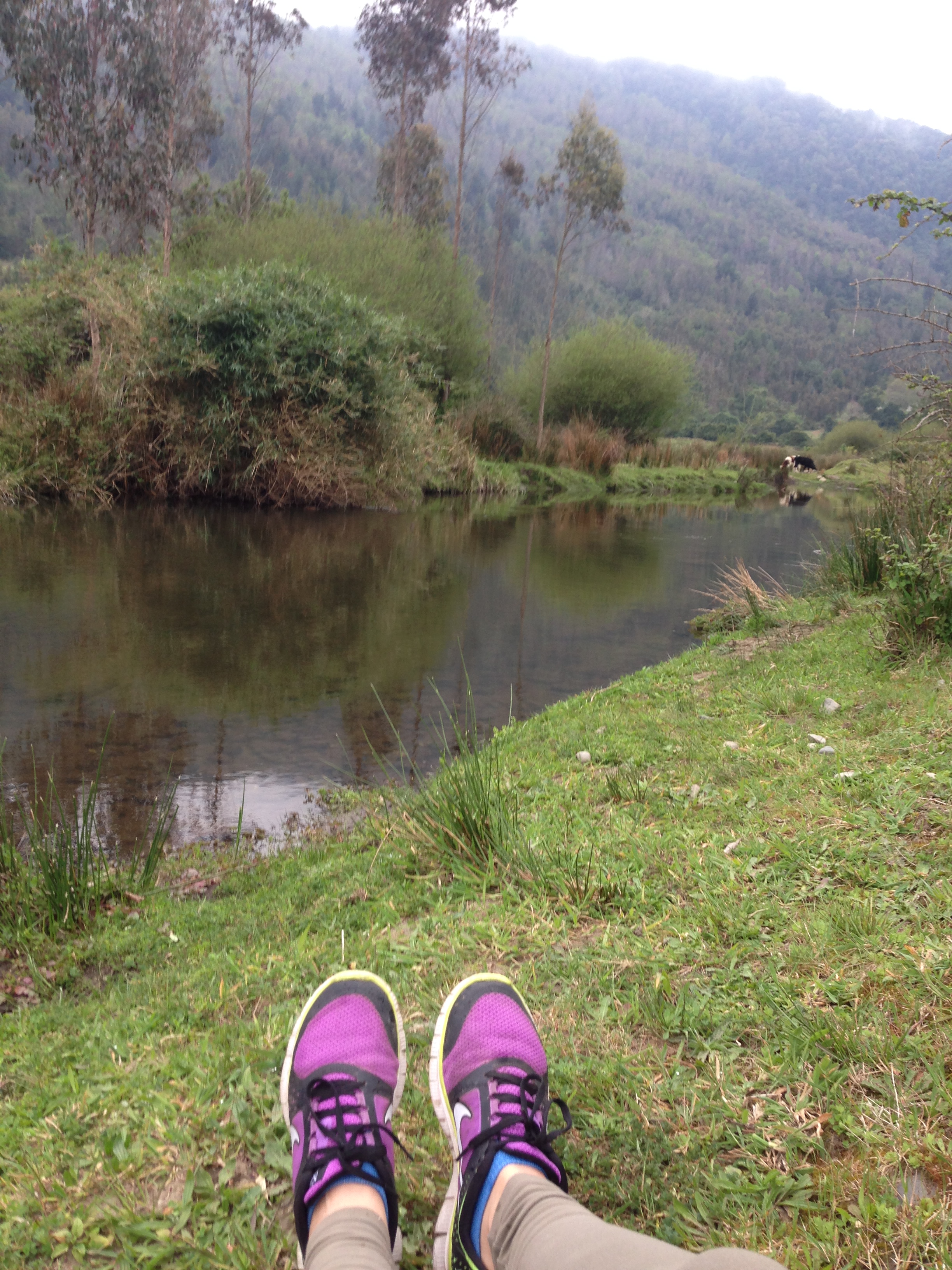
I went on a run to the river and sat down a bit to take in the scenery and a quick photo!


Diego in Brazil: Getting to know Rio’s Zona Sul

October 29, 2013

If you have been following my blog or have read one or two posts, then hopefully you have noticed that I have been trying really hard to avoid becoming yet another tourist in this dynamic city. Typical questions from friends and family back home can be anything from “Do you go every day to the beach?” and “Have you visited many favelas?” to “Is every Brazilian really sexy?” or “Is it true that no one really works and people just relax all day?” What I experience every day at PUC-Rio (take a look at some of the pictures in this entry) is drastically different from these questions.

Diego.Brazil1

PUC-Rio constantly has new cultural activities on campus. This picture shows two students and many design and architecture books.

I must admit that if I had come to Brazil a year and a half ago I would most likely fallen into the trap of experiencing Rio de Janeiro from this perspective. And that is of course no surprise. The touristic and exotic discourse surrounding Rio de Janeiro has been shaped for decades. The mix of beaches, forests, mountains, and industrial areas make of this city a mystical experiment in the eyes of many.

Now that I look back, I can more easily understand why as a Guatemalan I grew up constantly having these images in mind. To some extent I think Rio the Janeiro becomes the object that could fulfill, in an ideological and exotic way, what many people think we lack back in Guatemala. I do not support this idea, but I write it here for you to have an idea why I have been so focused on not buying into it. Keeping this in mind, I have continued to wonder how to then avoid becoming yet another tourist.

Well, if you have read some of my posts you know I have tried to understand what each part of the city means for those who live here. Luckily studying abroad in Rio de Janeiro has given me the time to understand how different socio-economic and cultural groups experience this city differently. My host family certainly has a particular perspective on favelas, the government, Rio’s public services, the city’s wealthiest areas, and so on. Such perspective does contrast with the way many of those who I have met in my host university think. In the beginning I assumed that studying in a private university would restrict me to meet only a certain wealthy sector of Rio’s student population. As you may have guessed already, I was completely wrong.

I wrote this short entry because in the next two or three posts I will share with you some of my trips to Rio’s southern zone. My host family lives in one of these neighborhoods and after gathering different perspectives, stories, complaints, and expectations from many people in the past two months I feel somehow ready to let myself explore much more. Reaching a point in which I can fully appreciate how Rio is experienced differently by the countless groups and identities living here is of course impossible. Yet I have tried my best to build an understanding of the city that will allow me to leave my study abroad program knowing that I truly challenged and changed my past ideas of Rio de Janeiro.

We all have different goals for our study abroad programs. I will feel incredibly satisfied if I can get close to achieving one of mine. Come back for the next posts to get to know some of Rio’s neighborhoods!

Diego.Brazil2

A very interesting debate on the democratization of culture. I thought I would stop by to take the picture and eventually stayed until the debate finished.


Mel in Chile: The South Part 1

October 25, 2013

The South: Part 1

I have finally returned to Santiago from the ten-day excursion with my study abroad program. If I was promoting SIT before, I am really promoting them now! The excursions are valuable because they contextualize our lectures, readings, and discussions. The excursions allow us, as students, to move closer to the reality of the theories and discourses we are exposed to in an academic environment.

The title of this blog is “The South: Part 1” because I will divide our trip into three parts. For the first two days we traveled to Ralco, a town in the Biobío region, and stayed in cabins with the other students in our program. The next five days we participated in a homestay in small village called Valle Elikura. During this time we learned about the practice of communal tourism, engaged in discussions with community members, and heard stories of struggles and achievements of the Mapuche group. As we bid our temporary homestay families farewell in Valle Elikura, we spent the last two days around the city of Concepcion. These last days we visited a coalmine, the industrial complex of a forestry company, and had two lectures at Universidad de Concepcion.

Worry not; all of the above events will be described in detail in the upcoming posts.

So this particular post is about the first part of our excursion. We left Santiago at 10 pm on the evening of Sunday, October 13. We drove through the night and arrived to our cabins in an area just outside of Ralco at six am on a very chilly Monday morning. Biobío is the eighth region in Chile bordered by the Pacific Ocean to the west and the Andes in the east.

We all devoured breakfast like hungry wolves that morning and headed out to find our cabins. I am not a car/bus/airplane sleeper so I was tired. I planned to claim my bed and sleep well into the afternoon.

As I was wobbling through the grass, sandwiched in between the two backpacks I was carrying, I looked to the left and felt like I had been zapped awake by an electrical force. I saw the most bizarre and beautiful mountain. The peak looked like it had been split in three pieces by a lighting bolt. I thought, “Alright, this deserves some attention.” I dropped off my things in the room and, without any sleep, decided to look for a trail.

As fate would have it, there weren’t any trails leading up the mountain and the forest was too dense to create my own, so my intended hike turned into a nature walk.

The pictures will speak on behalf of the scenery much better than I will be able to describe it in words so I will not continue with descriptions.

cabins

These are the cabins we stayed in while in Alto Biobío

mountain

This is what our research methods class looked like Tuesday afternoon. The mountain is in the background.

I wanted to talk about what I enjoyed in Ralco. The town has a strong representation of Pewenche people, a group ethnically related to the Mapuche indigenous group in Chile. We were going to visit the Pewenche museum in Ralco. The last time we visited a museum trying to show “indigenous culture” we were in San Pedro de Atacama. It was an incredibly disappointing experience. Until recently the museum (in San Pedro) had an open display of a mummified body of an individual who belonged to the Atacameño group (the indigenous group in San Pedro de Atacama). The Atacameño community denounced this as incredibly disrespectful to their ancestors and an inappropriate display of the Atacameño people in general for many years. The mummified body was not removed until recently. I am positive I spoke of this in my blog post after the trip to San Pedro, but to recap; tourism in San Pedro is almost entirely based on foreign agencies. The indigenous culture is commoditized for consumption of western tourists, and the community itself is outside of any discourses and dialogue on how tourism of their region and culture is carried out. In literal terms, they are also physically outside of the center of the village. The center is now only for restaurants, tourist agencies, and hostels. It maintains a manicured “rustic” image of an “indigenous village” in order to supply tourists with the preconceived notions we have of exotic places. An anthropologist who works at the museum in San Pedro told us she will hear guides tell entertaining stories of Atacameño history to their groups that are incredibly far away from the history as told by the Atacameños themselves.

For this reason, when we were told we were going to a museum that exhibited Pewenche people and their culture, I was a bit weary and irritated.

When we entered the museum, however, I encountered a much different dynamic.

For starters, the museum was relatively small. The two people who worked there told us they were Pewenche. The young man let us know he would guide us through the museum. The museum didn’t have any displays of “ancient artifacts” produced from archeological digging sites. One section had photographs of different Pewenche people from Ralco with a caption of something they wanted to share about the Pewenche culture. Another area displayed Pewenche cuisine, including the instructions of how the food could be prepared. The other wall displayed and explained fruit and vegetables typically used by the Pewenche people in Ralco.

In the middle there were four wax figures of Pewenche males dressed in ceremonial attire, imitating a dance. Our guide told us next month he would dress in that way and participate in this dance.

This museum was a display of a living culture. The Pewenche people in Ralco designed it. They controlled the displays. Most importantly, they control the dialogue of how people outside the culture would consume what the museum exhibits.

We also visited a dam in Ralco. The building of dams is a big struggle the communities and environmental activists have in the Biobio region. I remember in my Environmental studies region we learned about the pros and cons of building dams. I particularly remember we had an exam on “clean” forms of energy so I diligently studied the flashcards of pros and cons I had created for the types of alternative energy we would have on the test. It was…a dejavu moment (i think?) to stand on the dam. I would look to my left and see a huge reservoir and look to my right and only see a tiny river. We also went inside the dam, into the control room to see the technological face of the structure. We also saw the various components of the dam, like the turbines the water turns and the magnetic sheet above it. As far as my understanding goes, the water from the river turns the turbine which causes positive and negative electrons in the magnetic sheet to move, which then generates electricity.

river

This is the river side

reservoir

and this is the reservoir side.

inside a dam

This is a section inside the dam where the crew controls….stuff.

The first part of our trip in Alto Biobío was incredibly valuable. I was incredibly happy with the museum. I also felt comfortable knowing I was not “consuming” images of an ethnic group that were built by people outside said group. It was also interesting to visit the dam and visualize not only the “pros and cons” that I kept thinking about, but also gain an understanding of how the structure functions internally.

Physically speaking, the area is incredibly beautiful

It is my second favorite museum in Chile.

Stay tuned for Part 2!